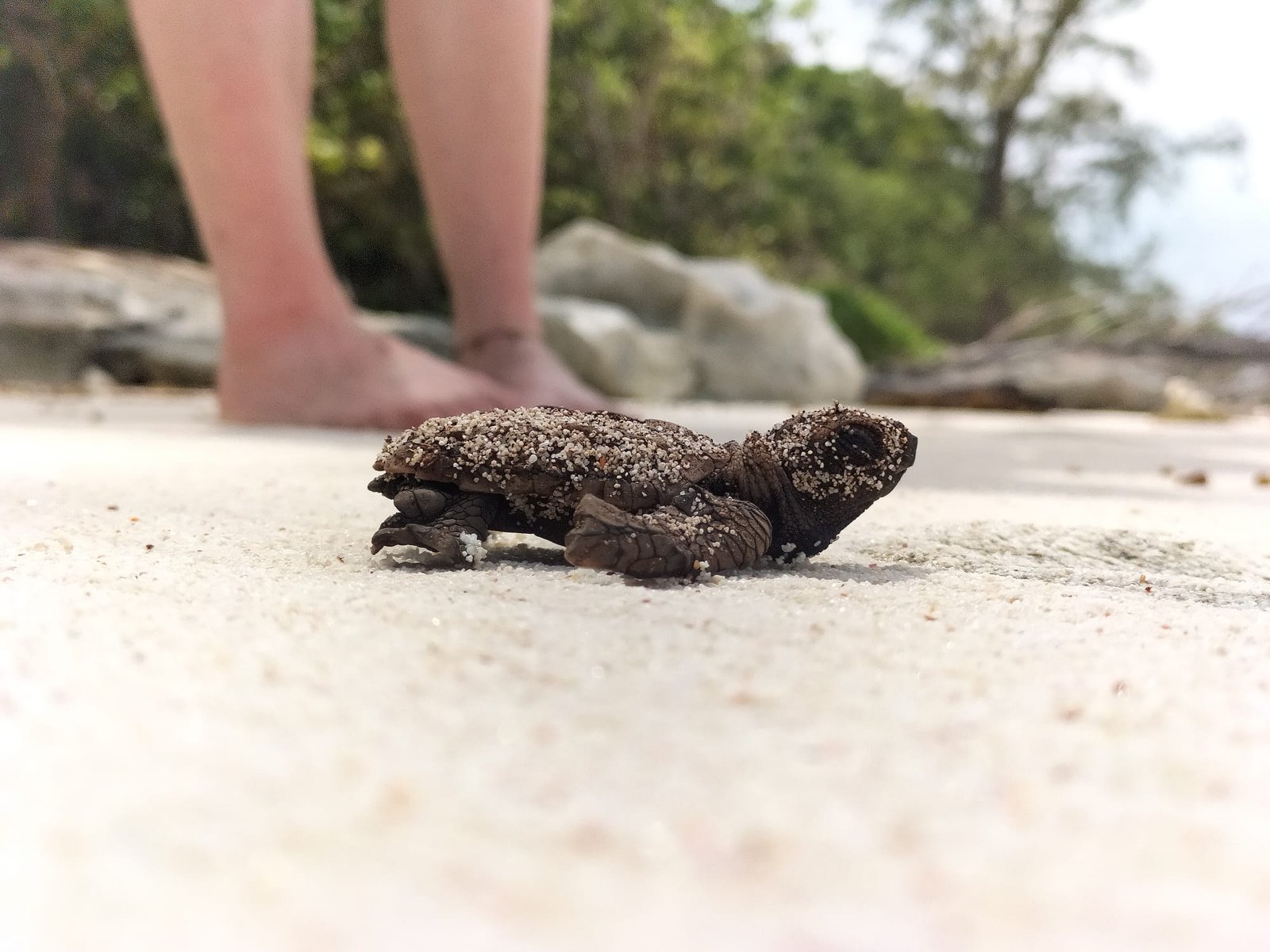
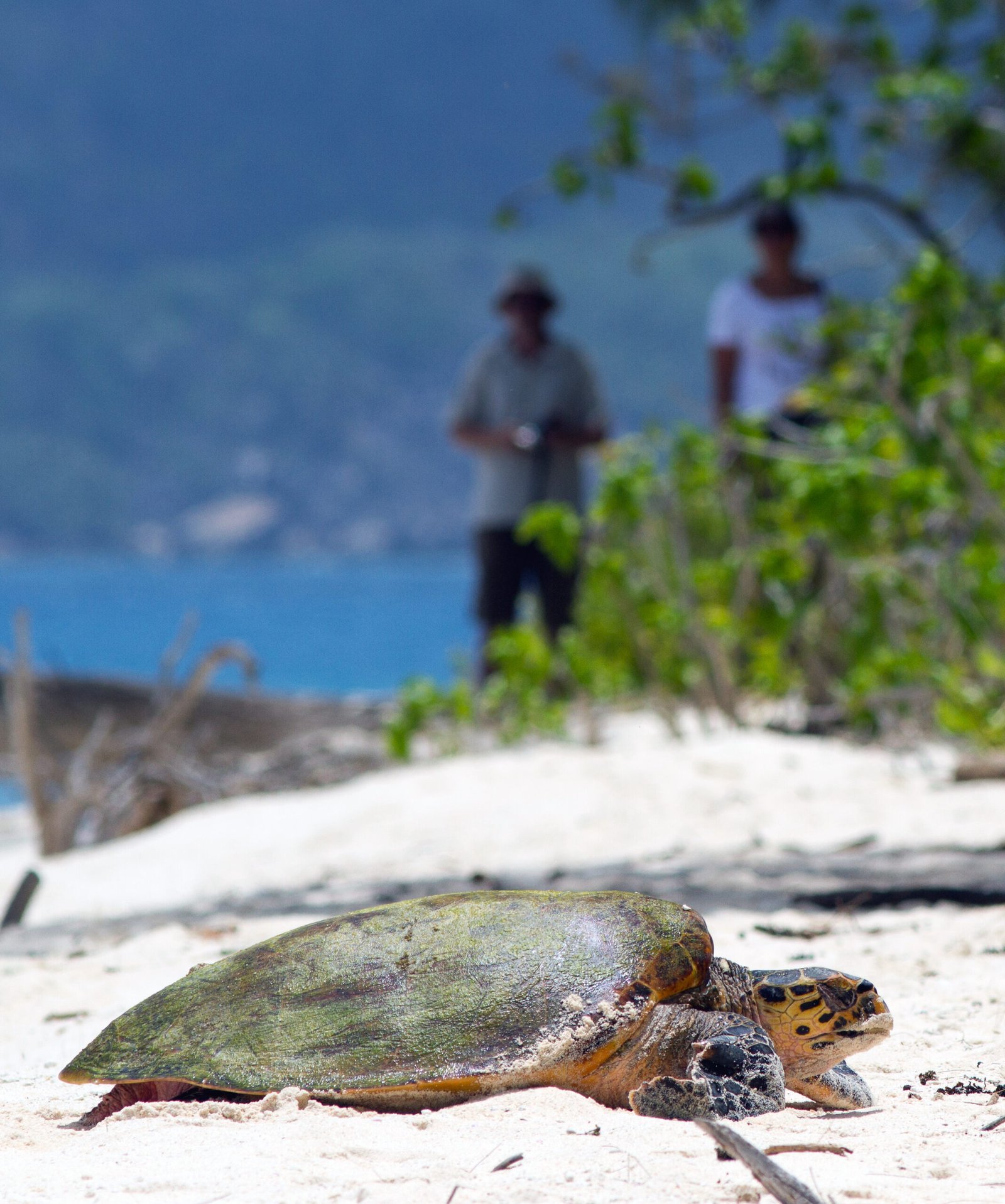
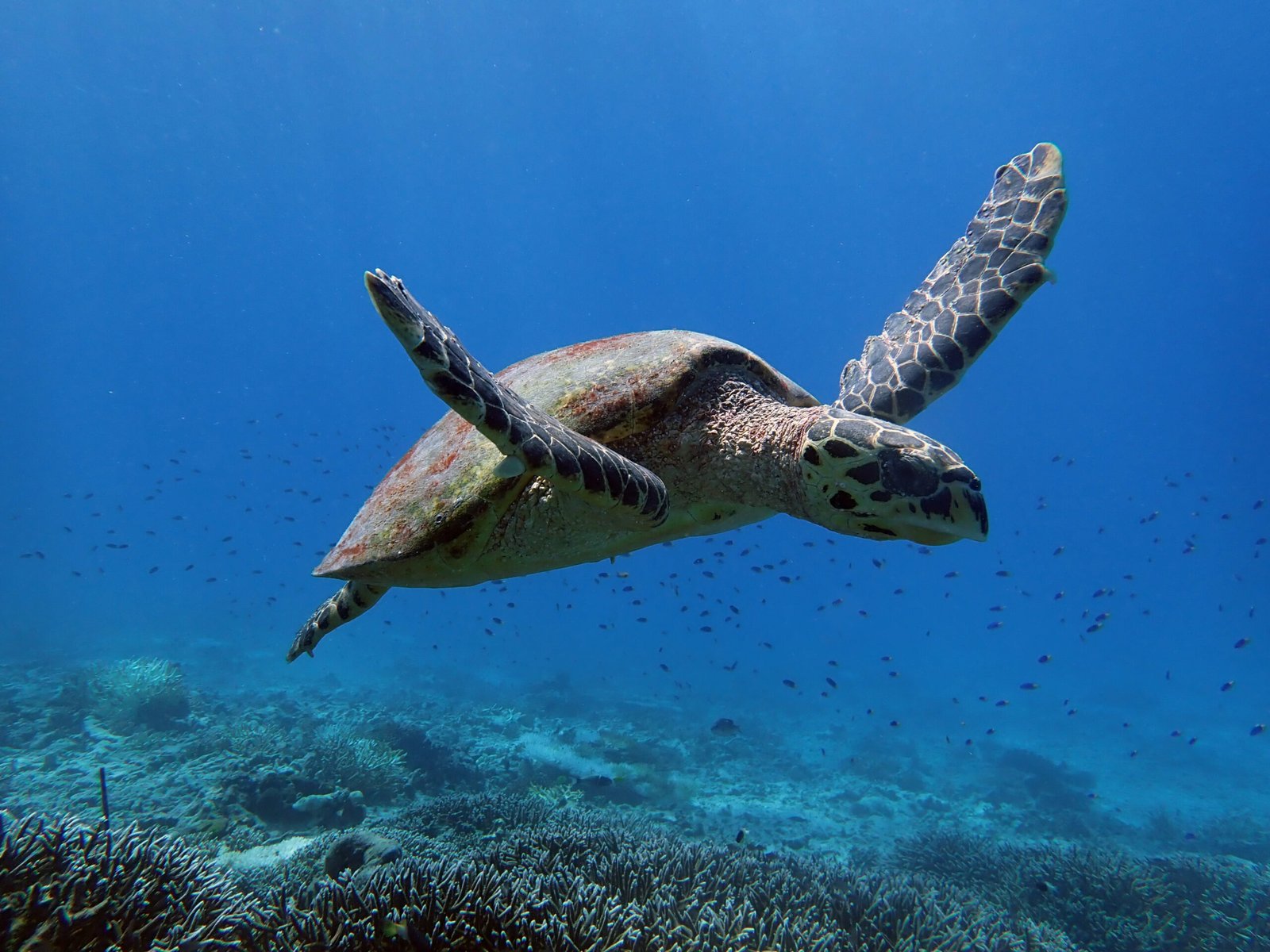
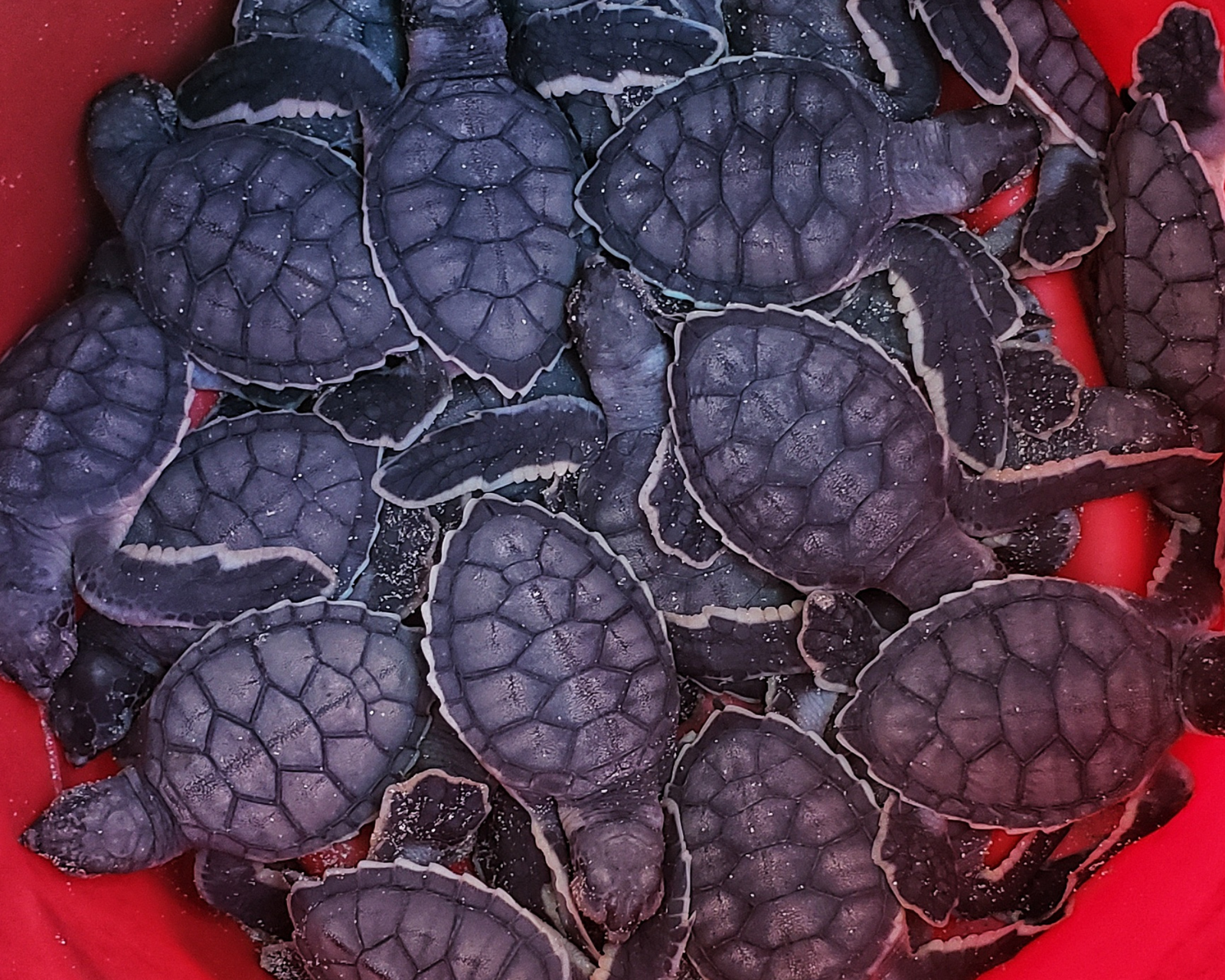
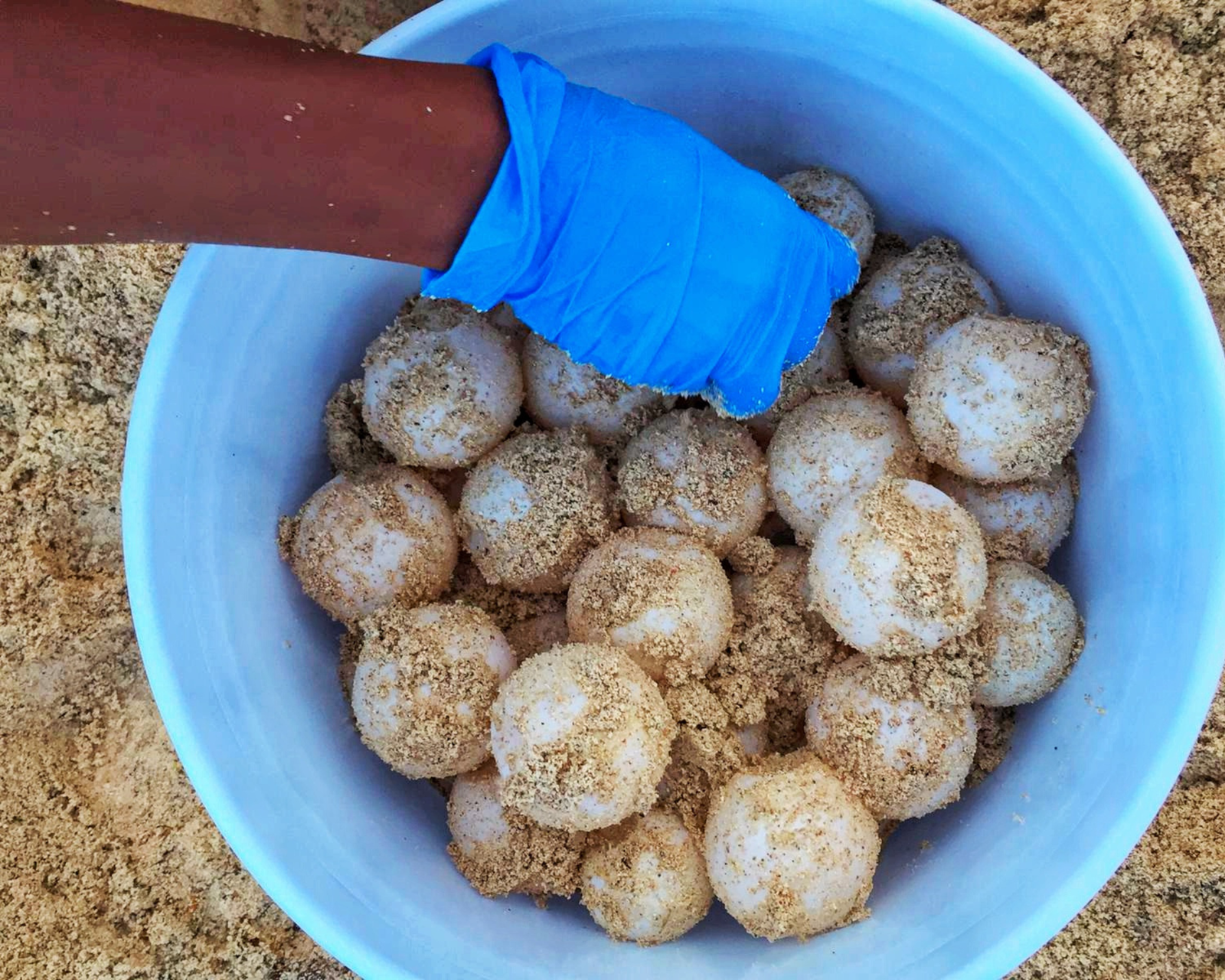
For our third Knitters in Residence cohort, we’re leaving the North Atlantic behind and following one species across very different ocean landscapes: The hawksbill sea turtle.
And this residency starts where all Knit for Wildlife projects should start. With people who know the species. We’re incredibly happy to be working with Nature Seychelles, the Barbados Sea Turtle Project and Cooperative Casa Carey in Nicaragua. Three organisations working with hawksbills in three very different places.
Together, they’re giving our knitters a much bigger picture of what hawksbill conservation actually looks like.
NATURE SEYCHELLES | COUSIN ISLAND
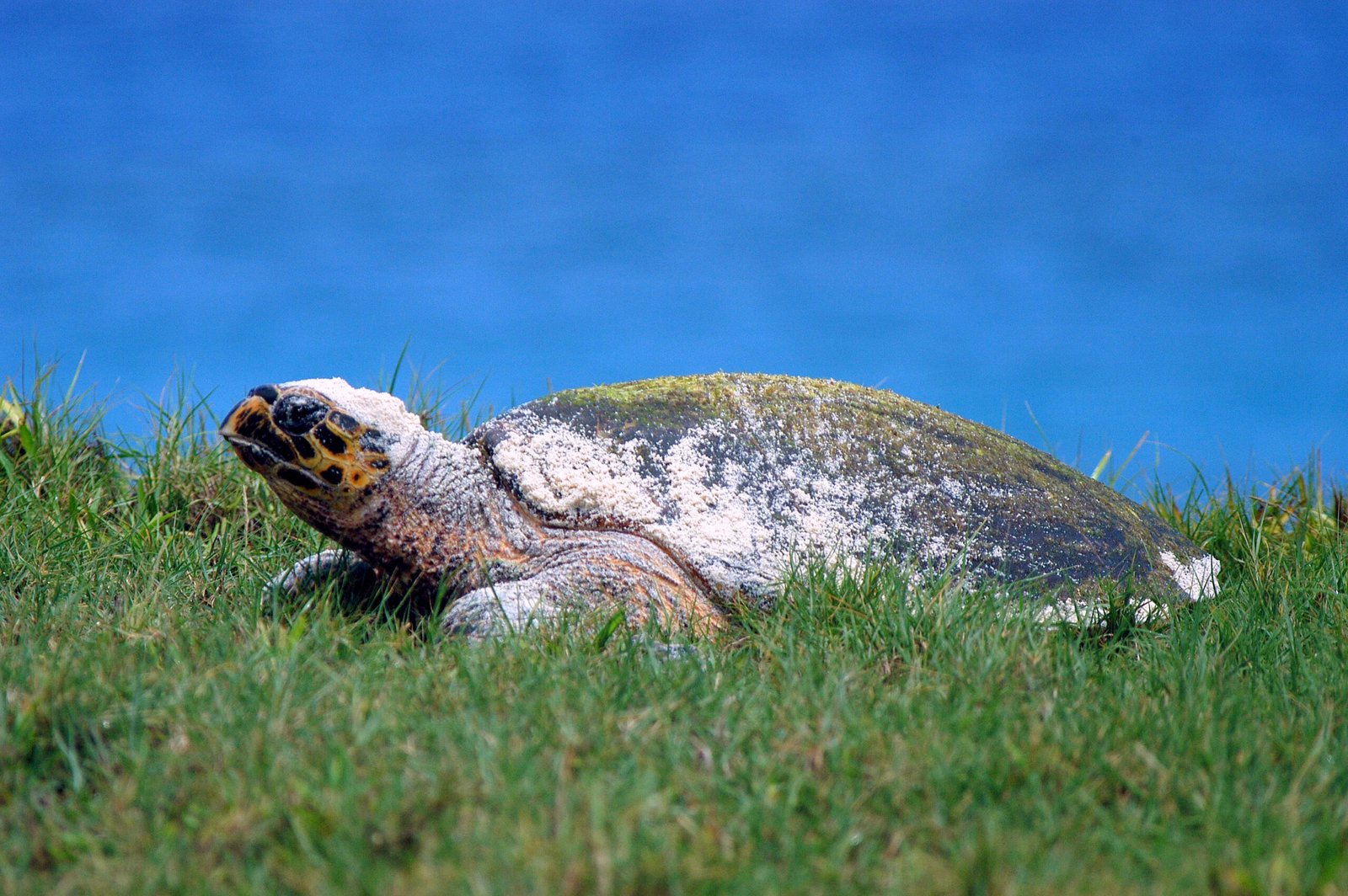
Cousin Island Special Reserve is one of the most important hawksbill nesting sites in the Western Indian Ocean. Nature Seychelles has been monitoring hawksbills there since the 1970s, making it one of the world’s longest-running hawksbill monitoring programmes. During nesting season, teams patrol the beaches, identify and tag females, record nests and collect data that allows individual turtles to be followed across multiple nesting seasons. Nature Seychelles
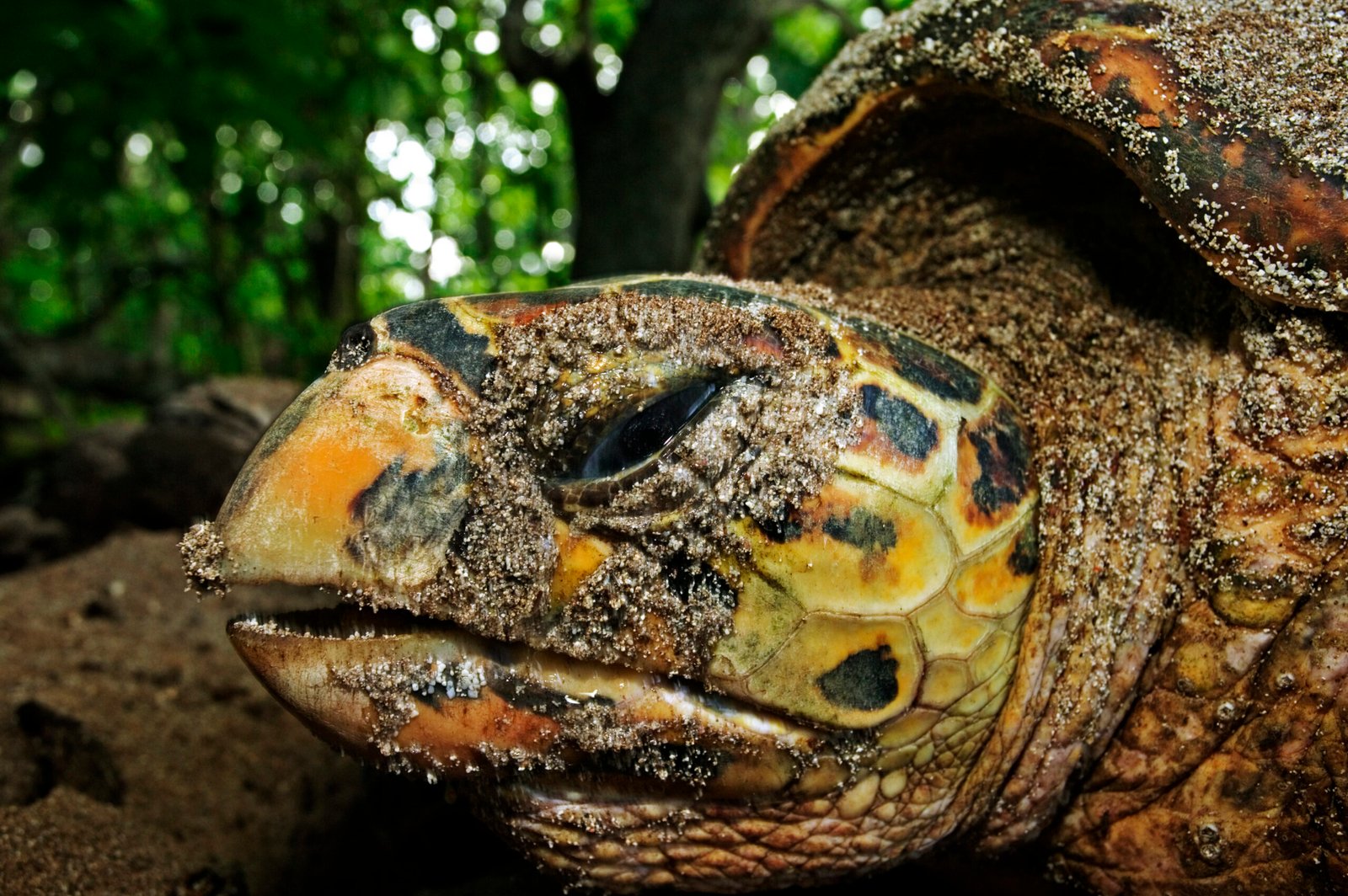
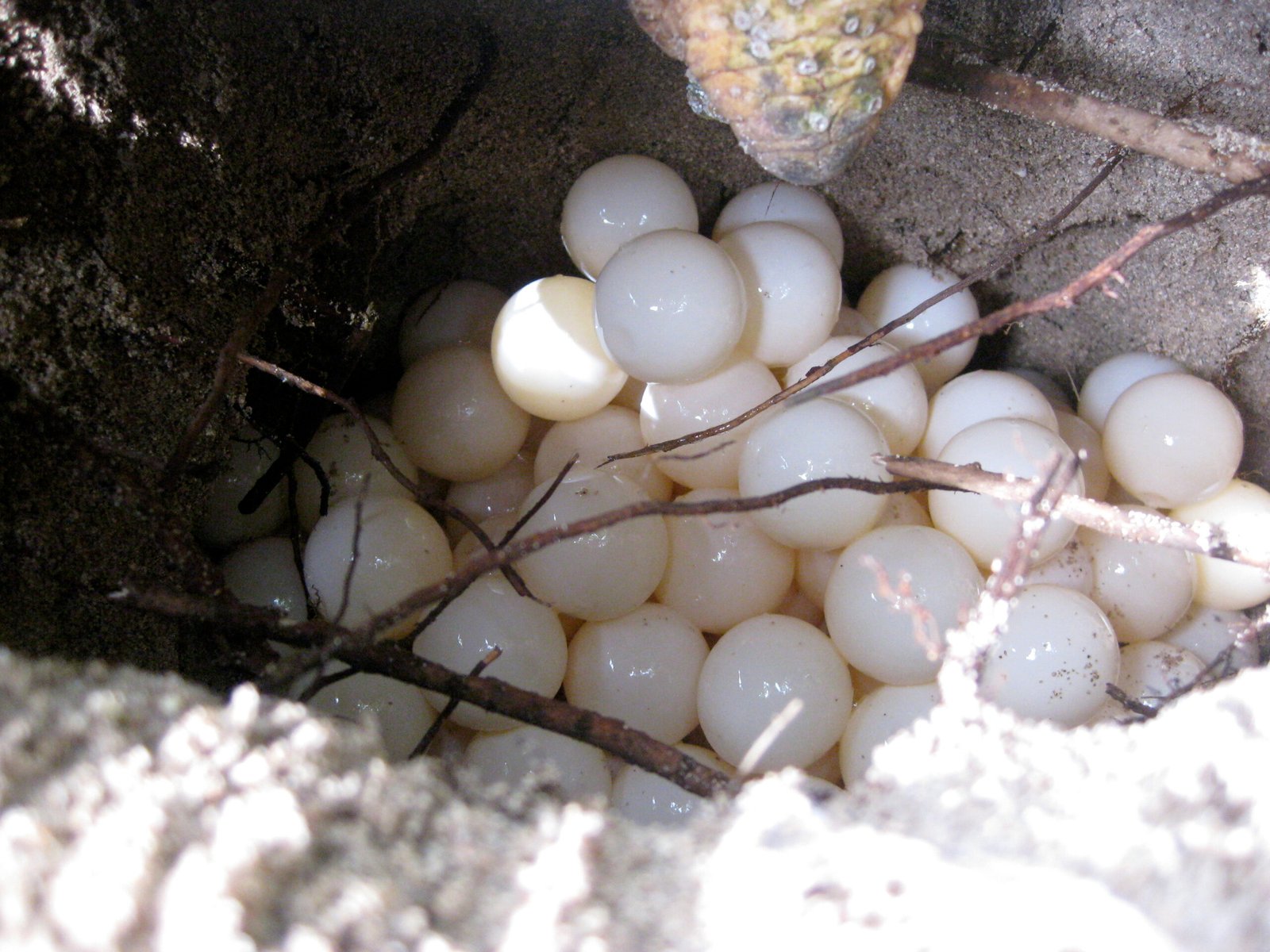
And there is a remarkable conservation story here: monitoring at Cousin has documented an eight-fold increase in nesting hawksbills since the programme began. Nature Seychelles For our knitters, that means access to decades of field knowledge. From nesting behaviour and eggs to anatomy, monitoring and the realities of protecting turtles on the beach.
BARBADOS SEA TURTLE PROJECT | BARBADOS
Across the Atlantic, the Barbados Sea Turtle Project has been working with marine turtles for more than 30 years. Barbados supports one of the Caribbean’s major hawksbill nesting populations, and BSTP’s work follows turtles through multiple parts of their lives. Teams monitor nesting beaches at night, tag nesting females, protect and relocate threatened nests, excavate nests to measure hatching success and respond to turtle emergencies through a 24-hour hotline. Barbados Sea Turtle Project
BSTP also studies juvenile hawksbills underwater on Barbados’s reefs. Turtles are captured, measured, weighed, photographed and tagged before being released. Satellite tracking has even followed adult females leaving Barbados for feeding grounds hundreds. In some cases more than 1,000 kilometres away. Barbados Sea Turtle Project
That combination of research, rescue, education and long-term monitoring gives our cohort another perspective on the same animal.
COOPERATIVE CASA CAREY | NICARAGUA
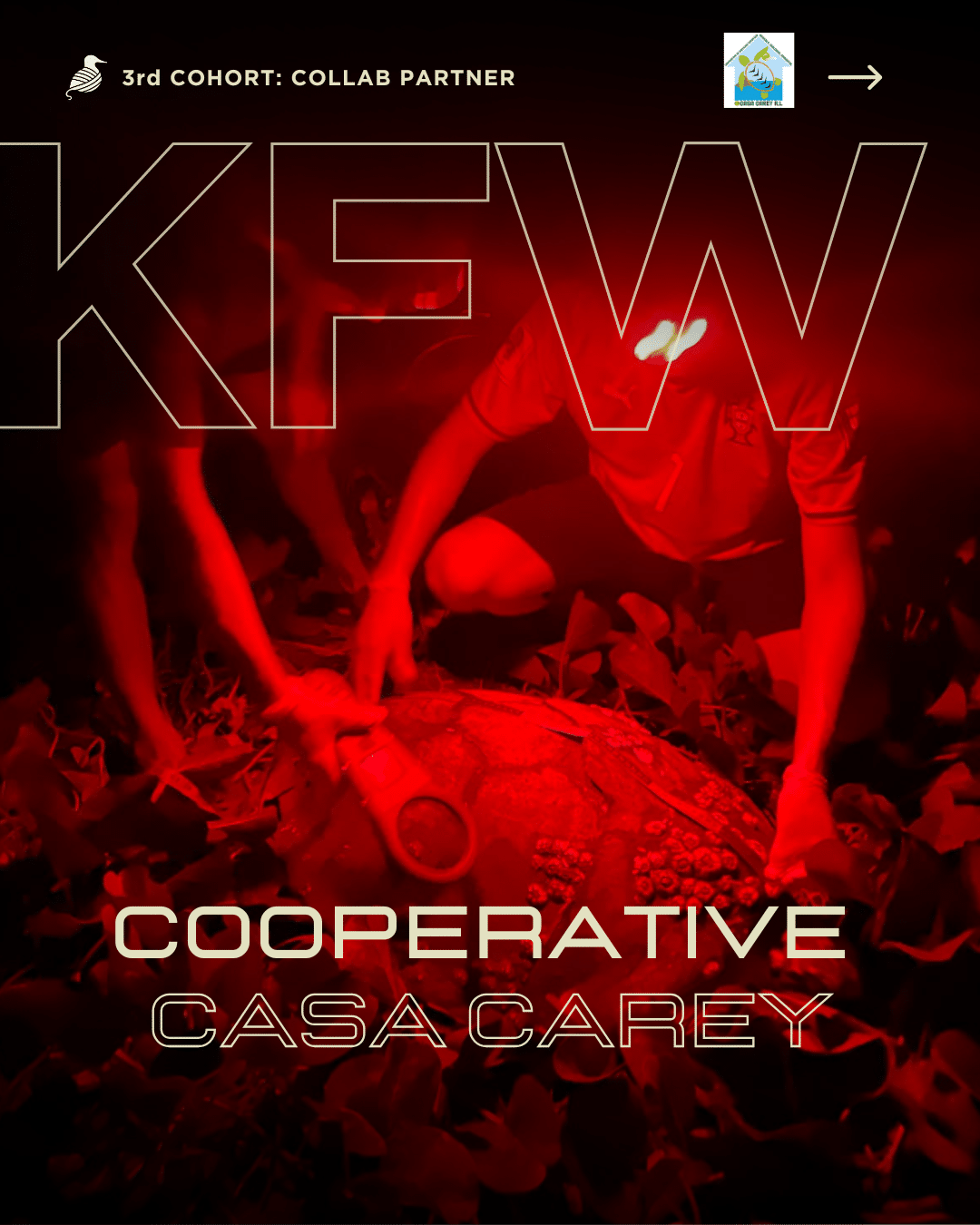
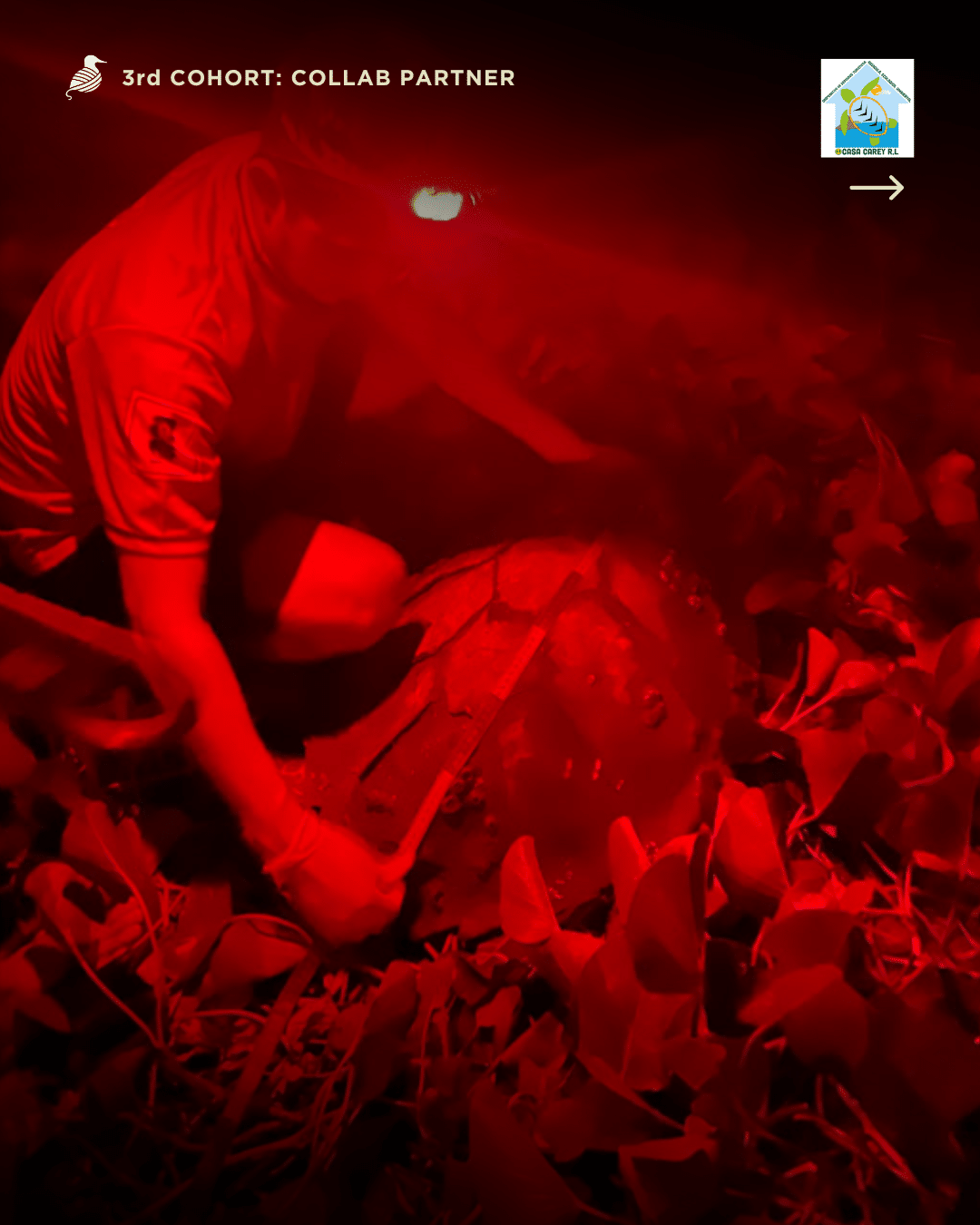
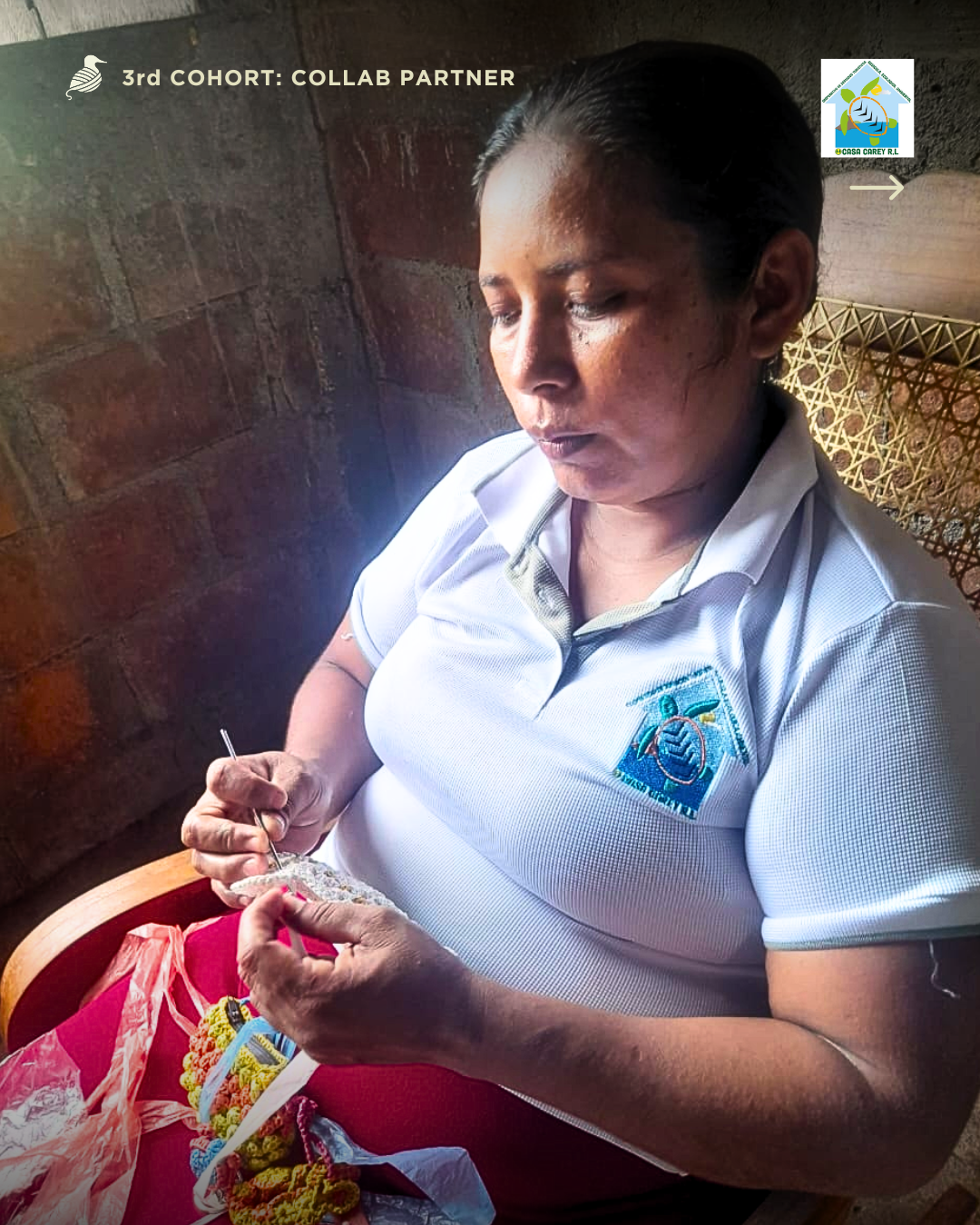
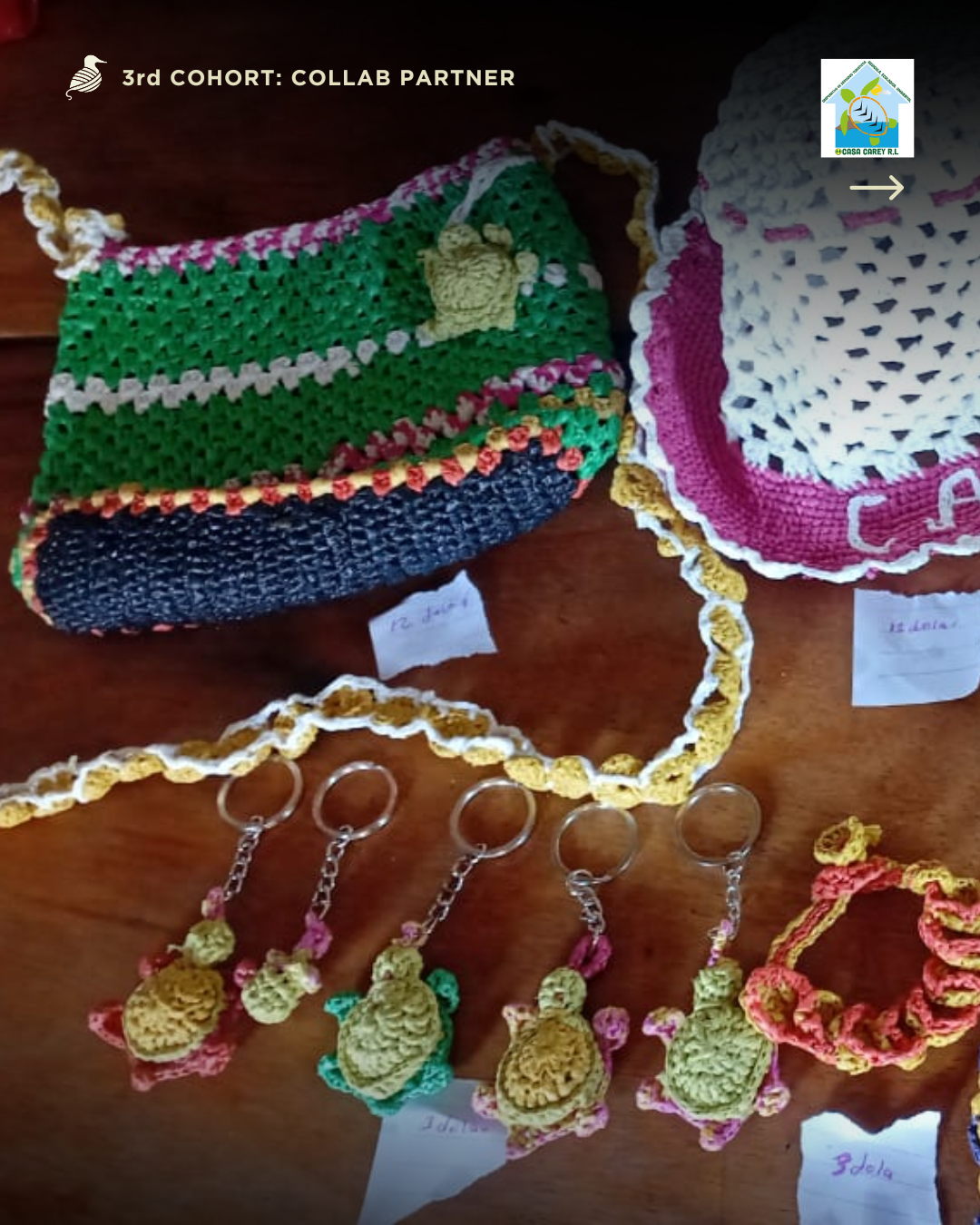
Then we travel to the Estero Padre Ramos Nature Reserve in Nicaragua, where Cooperative Casa Carey brings another dimension entirely. Casa Carey grew from a collaboration between local patrollers, women weavers and community members who had already been carrying out conservation work in the reserve. The cooperative was created not only to protect hawksbills and their ecosystem, but to build livelihoods and strengthen the local economy around conservation. Casa Carey
Their work includes beach patrols, hatchery monitoring, turtle tagging and research, beach clean-ups and mangrove restoration. They also work directly with schools and communities. Casa Carey
For Knit for Wildlife, that connection between wildlife, craft, community and livelihoods is especially exciting.
Welcome to Cohort Three. Welcome to the hawksbill.