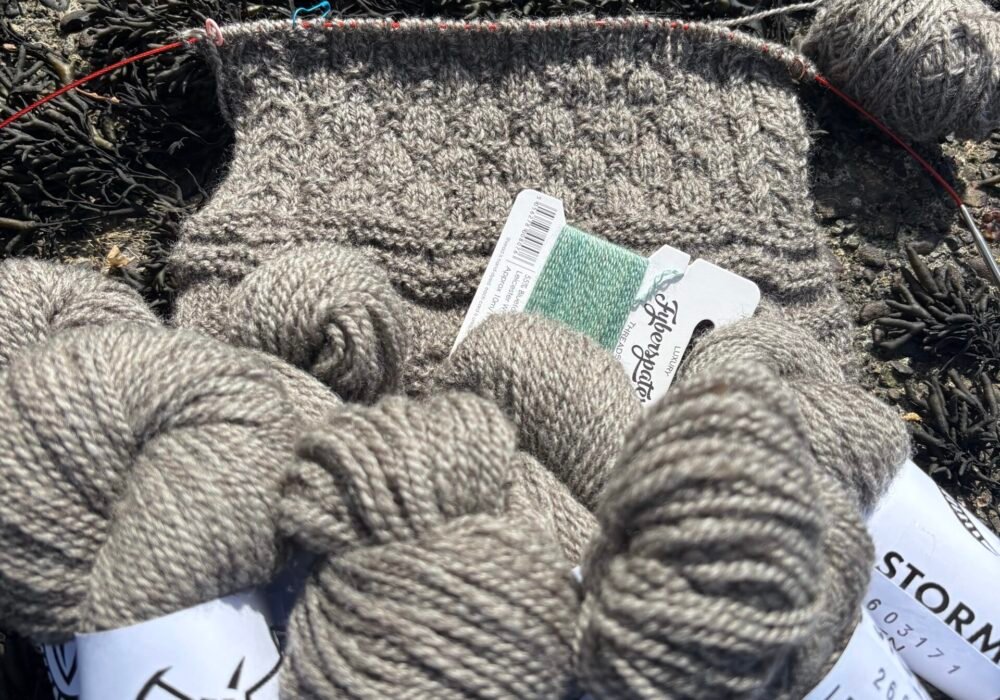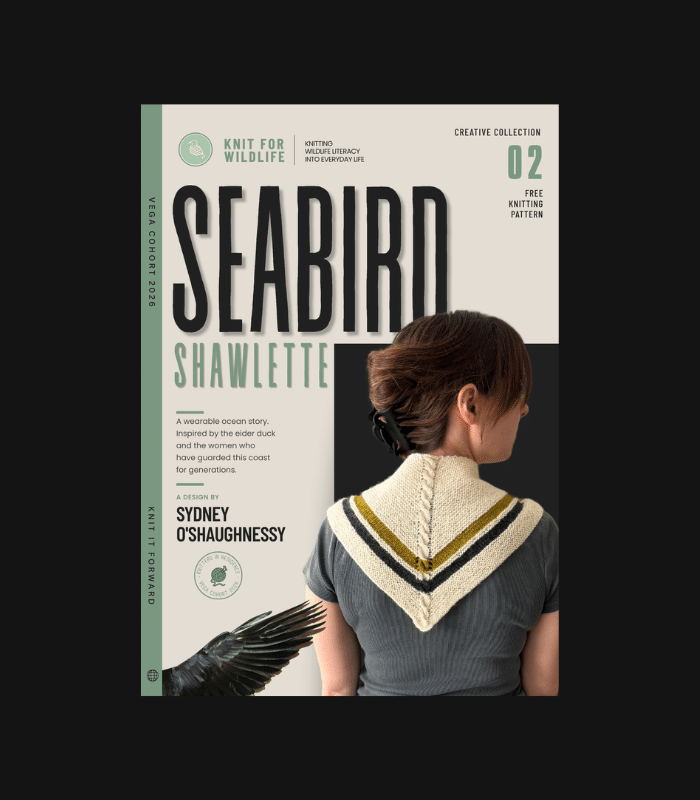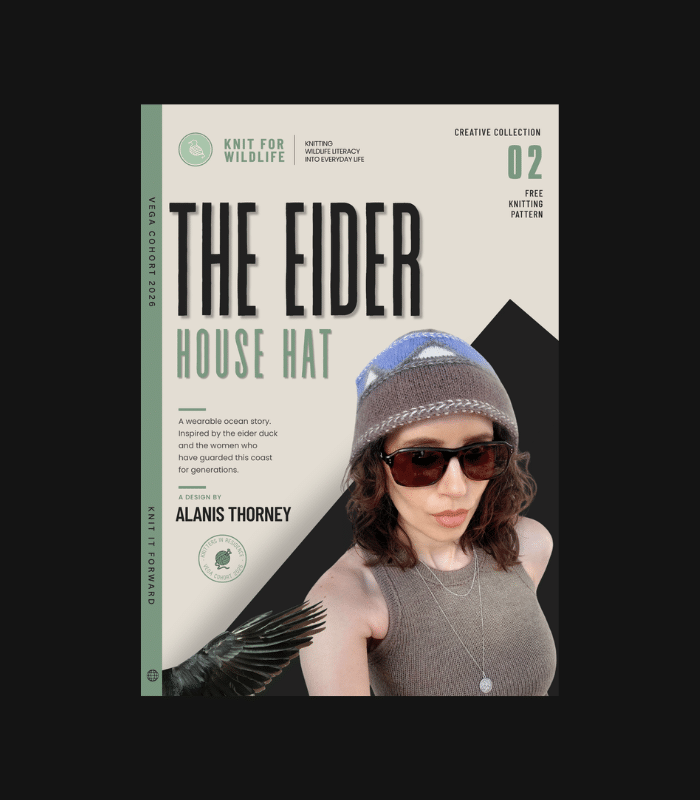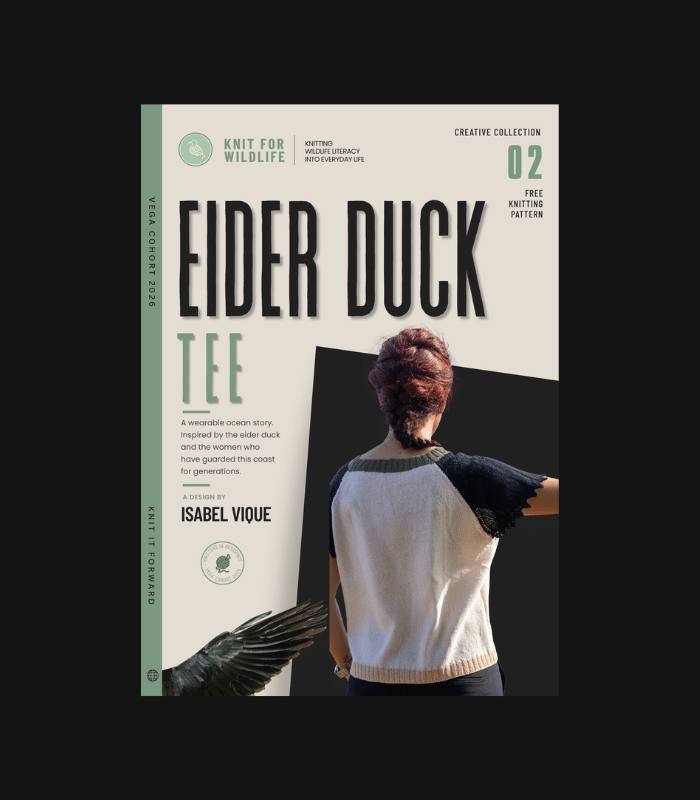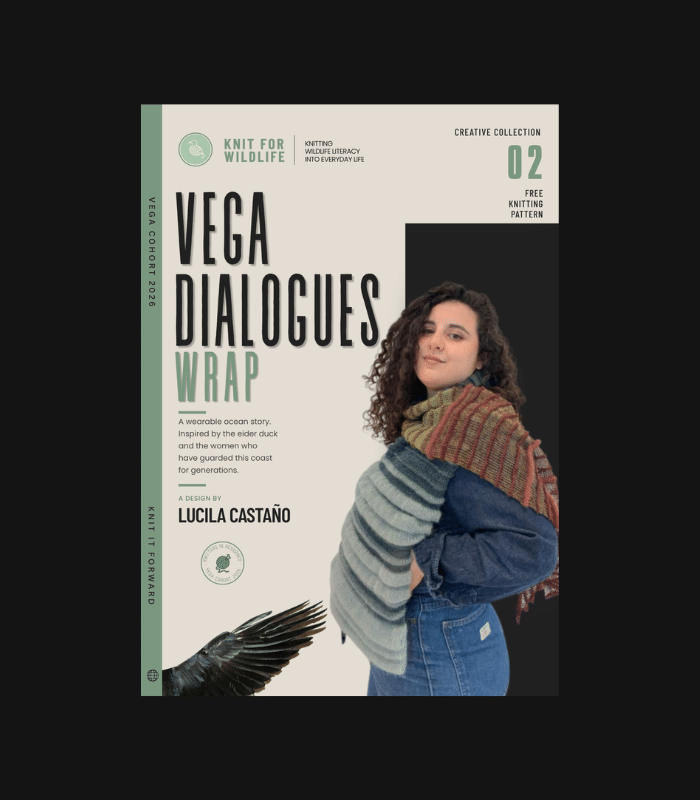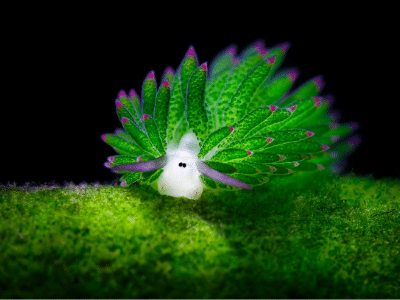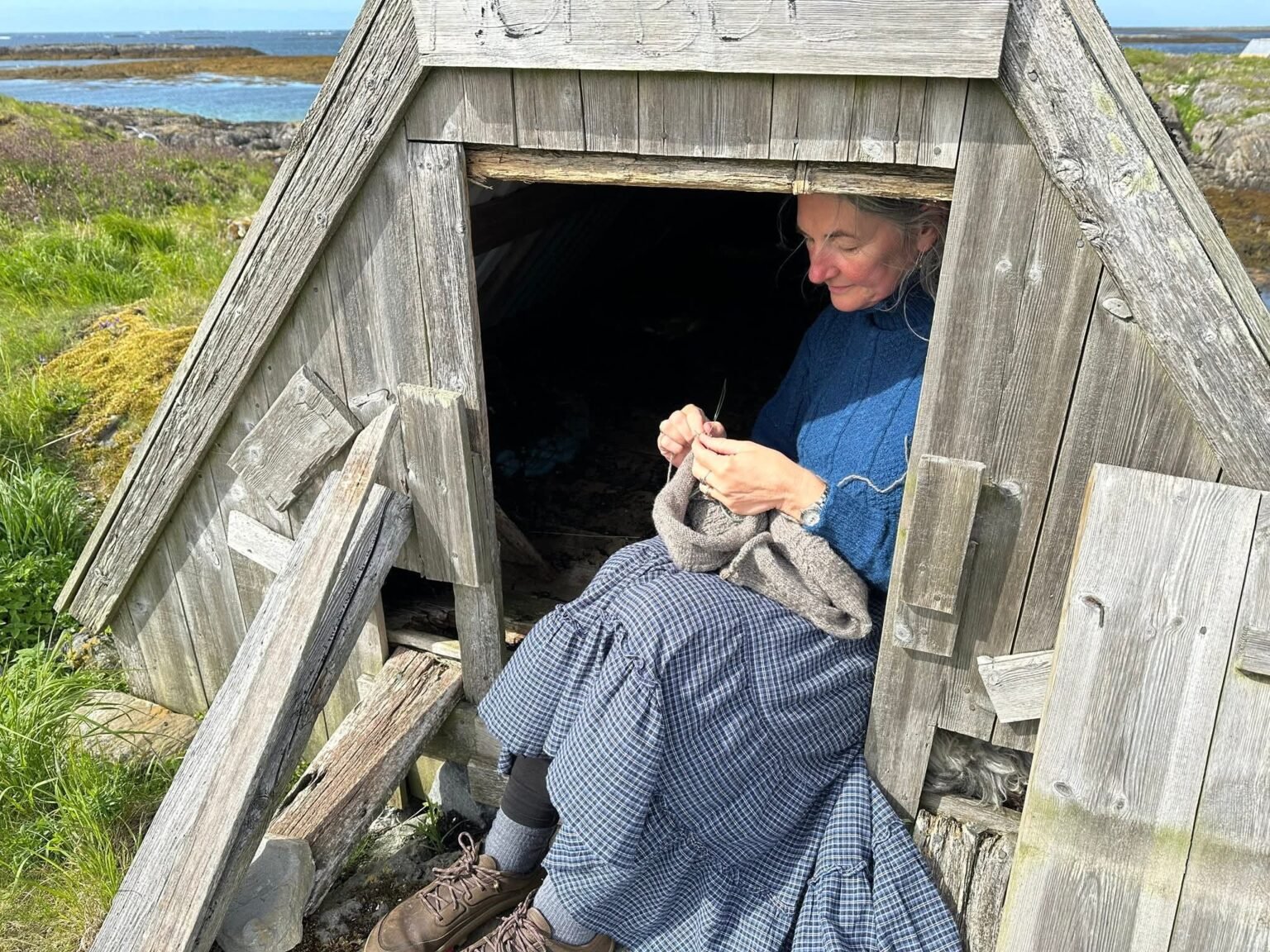





Sculptural Ruffles
Sharp Colorwork
Architectural Tubes
LESSONS
Beyond the Pattern.
A knitter's perspective
Welcome to our learning hub. Our Lessons program is designed to build both knitting skills and eco-literacy simultaneously. We believe that learning a new stitch technique should go hand-in-hand with learning about the natural world. From beginner casting-on tutorials to advanced textile theory, our open-access lessons are available to curious minds of all ages.
"When we teach a child or an adult to knit a salmon's scales or a tree's rings, we aren't just teaching a craft technique. We are teaching them to look closely at nature, to understand its patterns, and to care about its survival."
Step-by-step video and written guides for all the techniques featured in our open-access patterns. Master everything from basic garter stitch to complex lace, cables, and colorwork.
Integrated science lessons paired with each technique. Learn about structural biology while knitting a leaf motif, or explore mathematical patterns in nature through Fibonacci-based stitch repeats
Virtual and local "Yarn & Learn" sessions where educators and crafters discuss conservation books, wildlife biology, and sustainable crafting practices together.
Designing a wetsuit from recycled fishing nets and testing it in Arctic waters. Needs seed funding for prototype materials.
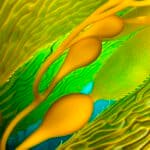
Filming a short doc about traditional seaweed harvesters before the practice disappears. Needs a GoPro, editing support, and travel gear.
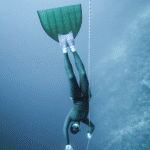
Attempting a 48-hour freedive relay to raise awareness about plastic waste. Needs safety gear and a small campaign budget.
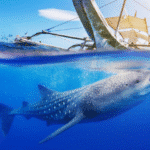
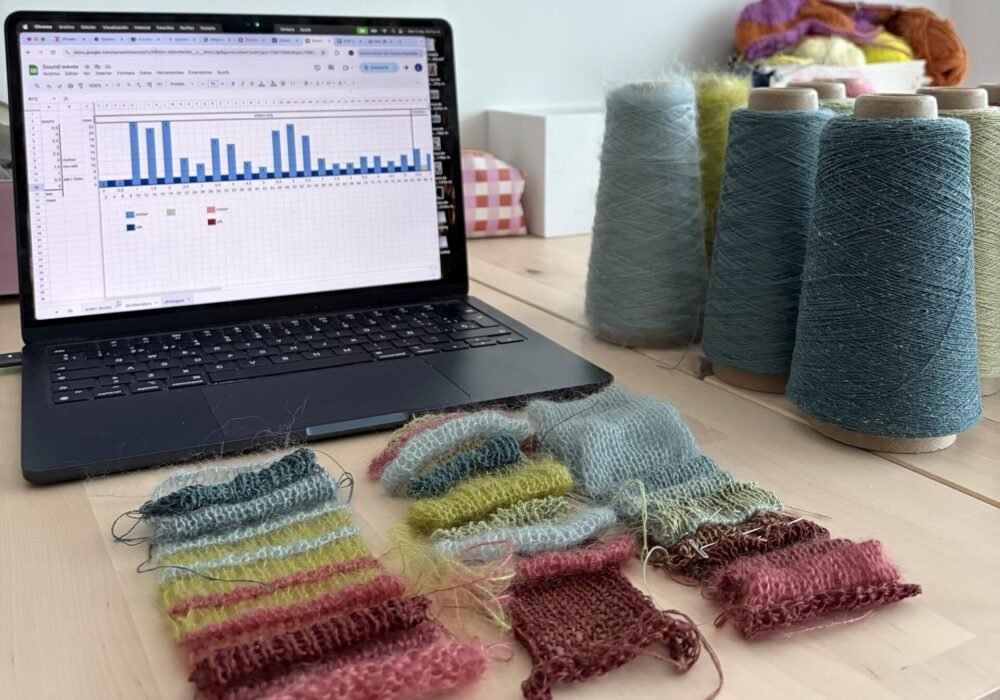
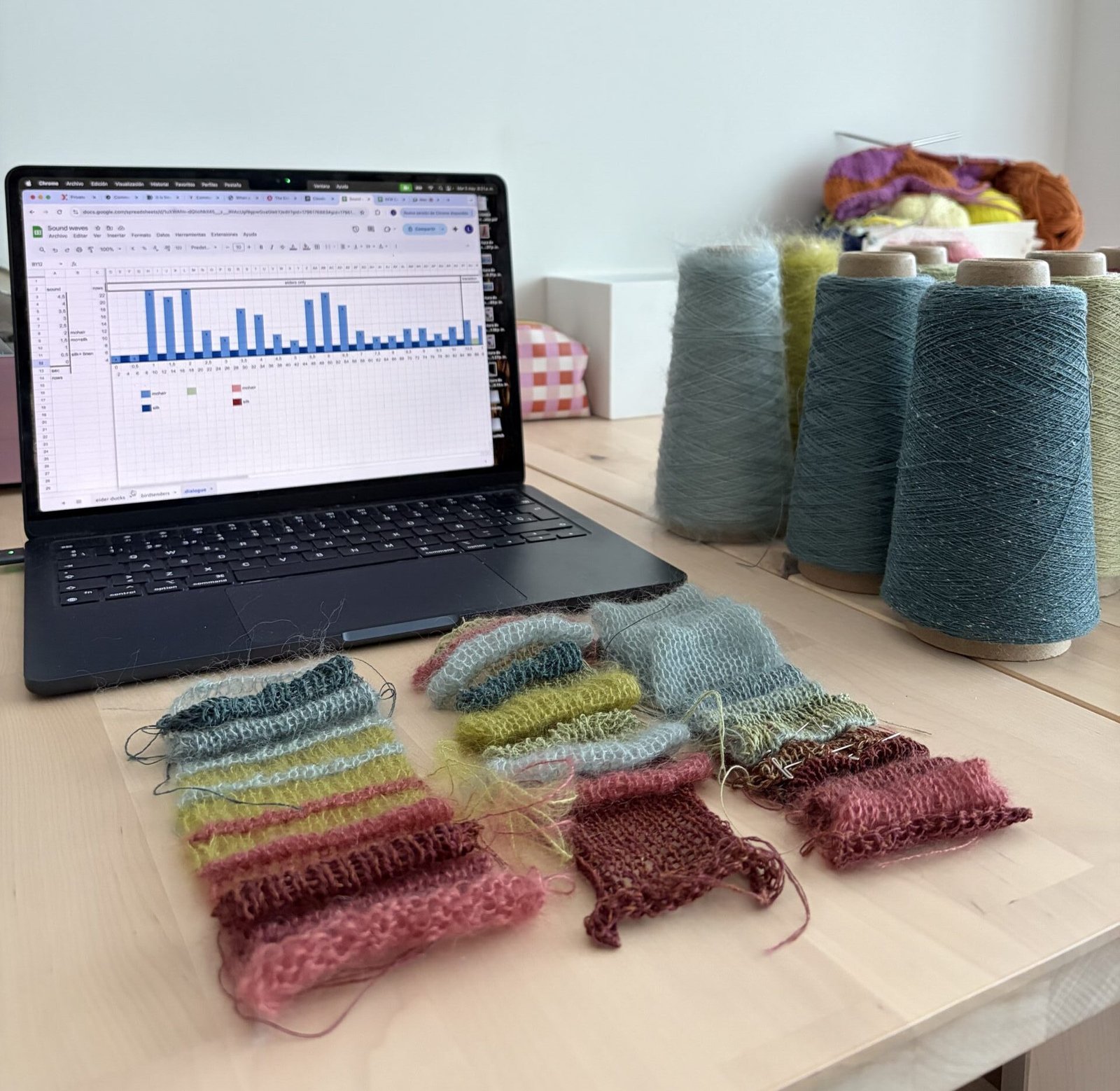
Creating a soundscape from hydrophone recordings. Needs access to equipment and support releasing the tracks digitally.

Starting a surf club for coastal youth. Needs boards, safety vests, and coaching support.
Eco-Literacy
Knitting to read the wild.
One of the biggest reasons knitwear starts looking repetitive is because too many designers stay inside the knitting world for inspiration.
When every visual reference comes from knitting Instagram, pattern platforms, or trend reports, the work often starts resembling what already exists. Strong knitwear usually comes from people who are looking much wider than yarn.
Many of the most recognisable garments are actually very simple. Think about the red Cousteau beanie. The fisherman sweater. The wolf cardigan from Project Hail Mary. None rely on extremely complicated stitch work. What makes them memorable is atmosphere, silhouette, texture, and identity. You recognise them instantly because they feel connected to a person, a world, or a story.
The Lesson: When your only references are knitting feeds, your work inherently copies what already exists. True innovation happens when you look wider than yarn.
The Exercise: Pick up an object from nature; a leaf, a stone, or a shell. Do not look at its color. Instead, close your eyes, feel its edge, and trace its physical geometry. Write down three words describing its weight and tension.
The Design Hack: Translate those three structural tactile words directly into your fabric choices. If the object felt dense at the core but paper-thin at the edge, you will engineer a piece that transitions radically from thick wool down to a wispy, loose-gauge lace.
The Lesson: Iconic garments, like the classic fisherman sweater or a rugged coastal wrap, don't rely on overly complex stitch work. They rely on silhouette, weight, and narrative atmosphere.
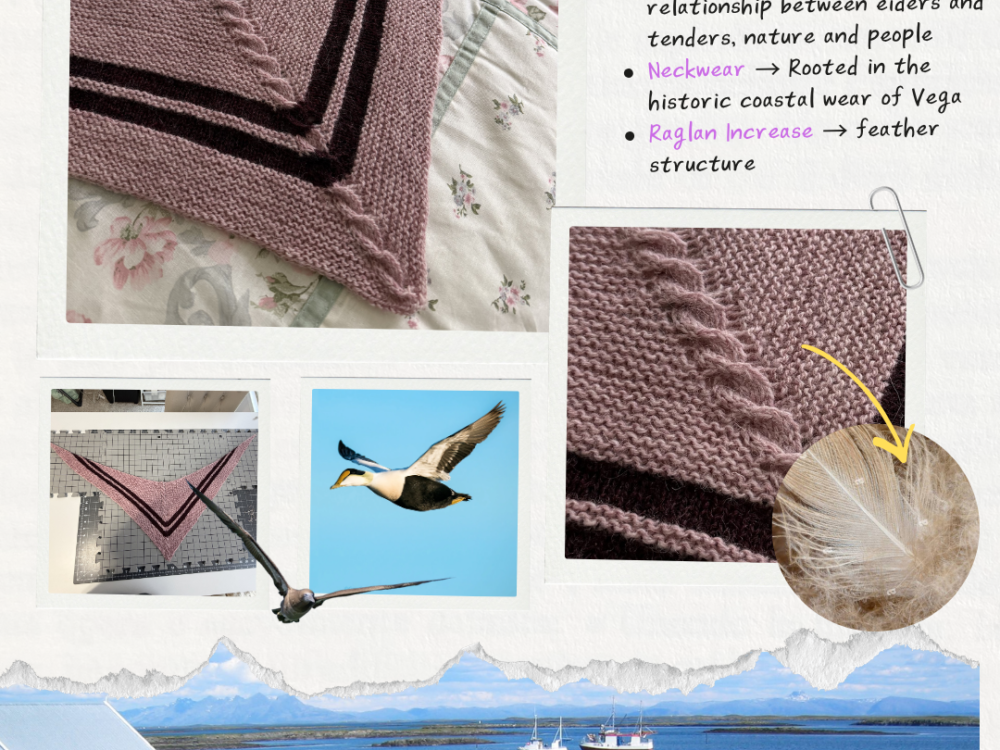
The Exercise: Look at the eider duck photo on the right. Notice how the stark, dark plumage lines completely ground the soft, airy body. Imagine the exact weather, wind, and landscape where this creature lives.
The Design Hack: Stop trying to fill blank space with complicated cables. Use structural framing instead. A single, perfectly placed contrast band or a sudden tension shift can tell a far more powerful geographical story than an entire page of intricate lace charts.
The Spine Architecture
The dark bands
Guest Spotlight
"Life can be so weird, it can be long and but it can also be short; that's why its important to pursue our passions and what makes us truly happy in life. Life gets to everybody in different ways. It’s getting knocked down and trying to figure out how to get up again, back into the light".
The new documentary First in, Last Out features Funk's unwavering determination to do everything necessary to get the ideal shot; to train, study, push through the pain, to put the time in, and to draw on the inspiration of her loved ones. It's a story about the raw human experience of triumph through grief and perseverance with grace in the eyes of chasing big dreams.
https://www.redbull.com/int-en/films/christa-funk-first-in-last-out
"Life can be so weird, it can be long and but it can also be short; that's why its important to pursue our passions and what makes us truly happy in life. Life gets to everybody in different ways. It’s getting knocked down and trying to figure out how to get up again, back into the light".
The new documentary First in, Last Out features Funk's unwavering determination to do everything necessary to get the ideal shot; to train, study, push through the pain, to put the time in, and to draw on the inspiration of her loved ones. It's a story about the raw human experience of triumph through grief and perseverance with grace in the eyes of chasing big dreams.
https://www.redbull.com/int-en/films/christa-funk-first-in-last-out
Click here to change this text. Ac non ac hac ullamcorper rhoncus velit maecenas convallis torquent elit accumsan eu est pulvinar pretium congue a vestibulum suspendisse scelerisque condimentum parturient quam.Aliquet faucibus condimentum amet nam a nascetur suspendisse habitant a mollis senectus suscipit a vestibulum primis molestie parturient aptent nisi aenean.A scelerisque quam consectetur condimentum risus lobortis cum dignissim mi fusce primis rhoncus a rhoncus bibendum parturient condimentum odio a justo a et mollis pulvinar venenatis metus sodales elementum.Parturient ullamcorper natoque mi sagittis a nibh nisi a suspendisse a.
Pick Your Lesson
Open-Access Lessons & PDF Tutorial. These guides are formatted to serve both as your on-screen webpage resource and as a print-ready PDF master document. Use these lessons to expand your crafting skills while deepening your literacy of the natural world.
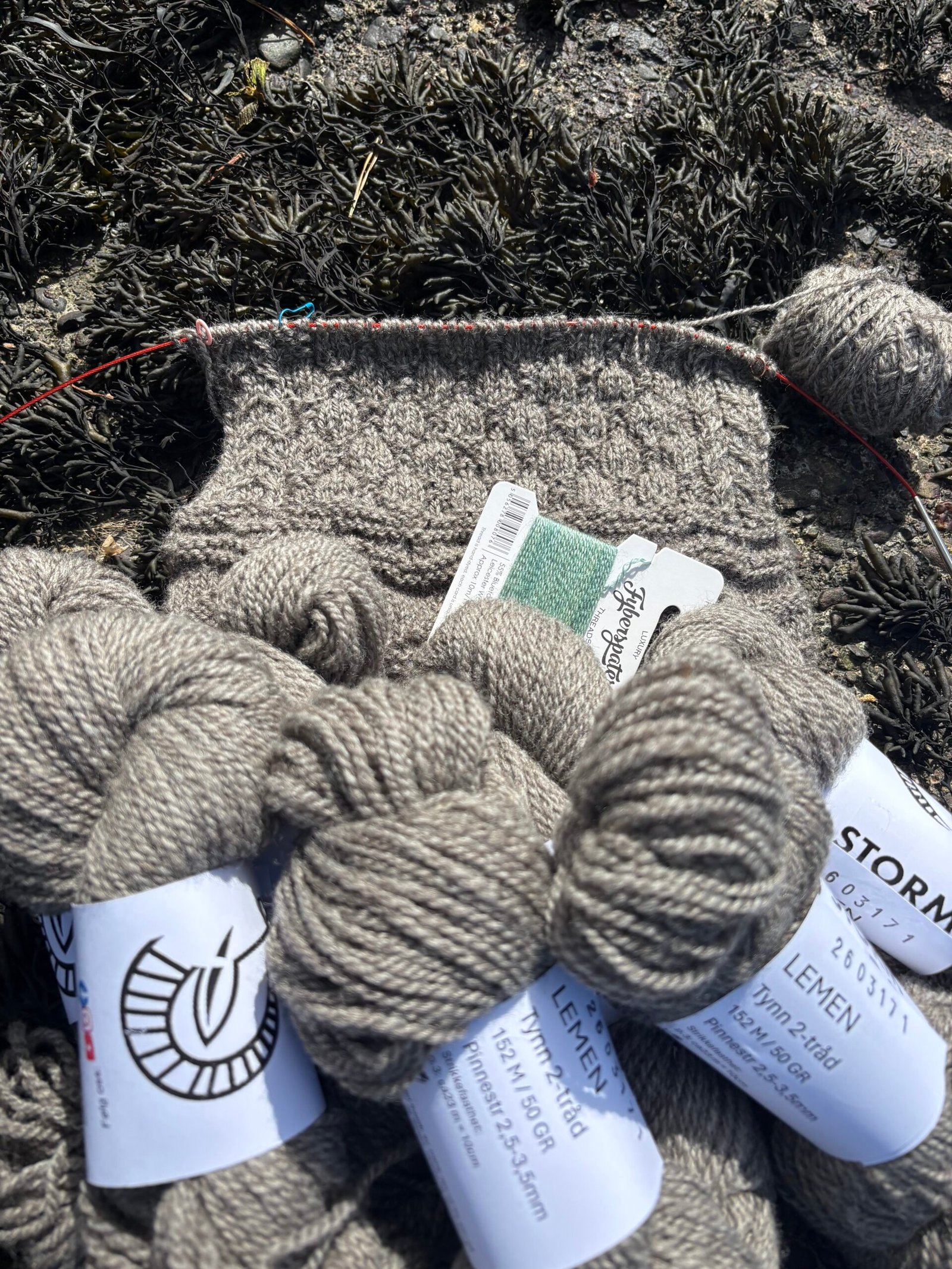
Next to nesting eider duck
Ecological Metaphors
The Data Stitch
Lesson 1:
How to tell a story via knitting.
Level: Intermediate
Eco-Literacy Core: Animal Adaptation & Ecological Metrics
Every knitted piece is a physical archive. Historically, textile patterns recorded regional status, family lineages, and local landscapes. In this lesson, you will learn how to intentionally code modern wildlife conservation data into your stitch structures.
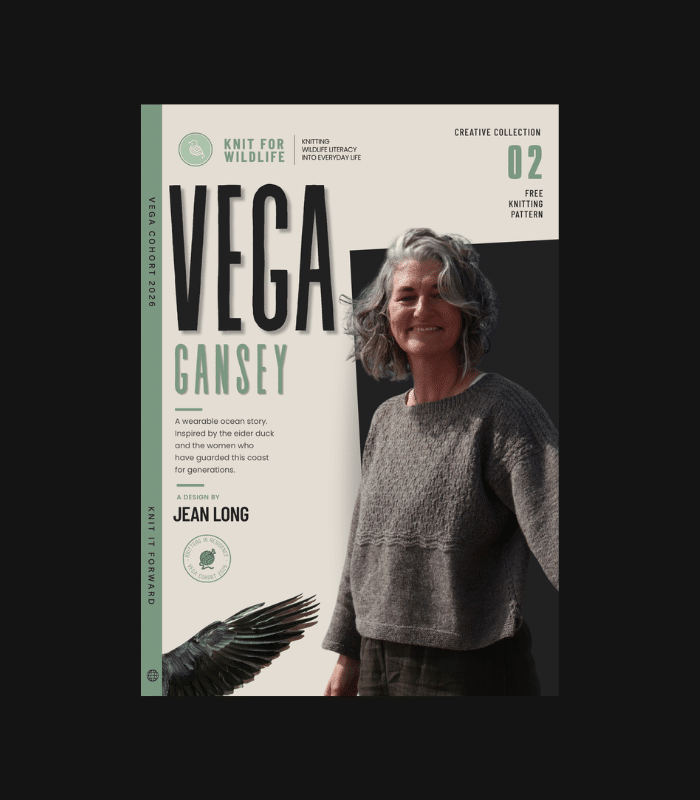
Photo of Jean - Vega cohort
Instead of choosing colors or textures at random, let raw ecological data determine your pattern repeats. This turns your garment into a literal graph of environmental history.
Step 1: Isolate Your Metric. Choose a data set with clear variance. Excellent options include:
Annual population counts of a specific threatened local bird species over a 20-year span.
The shifting date of first local autumn frosts over the last 30 years.
Daily marine temperature shifts above the baseline average.
Step 2: Assign Fiber Codes. Create a key where rows, colors, or textures correspond to numbers.
The Blueprint: The Climate Stripe Sequence
Baseline/Healthy Data: Work in smooth, relaxed Stockinette stitch using a deep organic color (e.g., forest green or ocean blue).
Deviant/Critical Data: Switch to a highly textured, unstable stitch like a loose Brioche or drop-stitch, using a contrasting warning tone (e.g., fiery ochre or bleached coral). The physical disruption in the fabric mimics the structural instability of the changing ecosystem.
You can tell complex stories about natural resource management without knitting explicit shapes of animals. Use traditional stitch constructions as structural metaphors:
Cables as Interconnected Food Webs: Interlocking cables represent biodiversity. When multiple cable paths cross and support each other, the fabric is dense and resilient. To narrate habitat fragmentation, intentionally taper a 6-stitch cable down to a 2-stitch twist, or let it drop off into flat reverse stockinette to represent a broken wildlife travel corridor.
Lace as Ecosystem Fragility: Use delicate lace eyelets to represent highly sensitive ecosystems, such as thawing permafrost or a bleaching coral reef. The negative space (the holes created by yarnovers) represents missing elements in the ecosystem.
Research a local conservation statistic (e.g., the ratio of protected woodland to developed commercial land in your area). Knit a 40-row swatch where the ratio of moss stitch (wild space) to flat stockinette (developed space) perfectly matches that data. Wear the resulting piece on your bag or coat as a conversation starter.
Lesson 2:
How to Create Original Knitwear.
Level: Advanced
Eco-Literacy Core: Biological Form & Biomimicry
Biomimicry is the practice of looking to nature to solve human design and structural problems. This lesson teaches you how to step away from pre-written patterns by utilizing the geometry, shaping, and textures found in the natural world to engineer original garments.
Before drafting a full garment pattern, you must build your "textile vocabulary." Take a camera or sketchbook into a wild space and analyze natural textures through a structural lens:
Tree Bark (Overlocking Protection): Notice how old-growth bark splits yet overlaps. You can replicate this structural armor by combining a twisted $2 \times 2$ rib with slipped stitches every fourth row, creating a thick, protective, windproof fabric matrix.
Bird Feathers (Aerodynamic Alignment): Look closely at a flight feather. The central shaft holds angled, interlocking barbs. This translates directly into a twisted-stitch chevron or herringbone chart where increases ($WPI$ or yarnovers) branch symmetrically off a central knit-through-the-back-loop ($K1tbl$) column.
Nature relies on specific mathematical constants to scale biological forms efficiently. Knitwear designers can use these exact principles to calculate organic garment shapes that fit the human body seamlessly.
The Fibonacci Sequence & The Golden Ratio ($1:1.618$): Found in pinecones, sunflower seed arrangements, and the spiral shells of marine mollusks. You can use this mathematical growth pattern ($1, 2, 3, 5, 8, 13, 21, 34\dots$) to design an organic, sweeping crescent shawl.
The Math: Increase your row counts between increase points along the Fibonacci scale. For example, knit 5 rows flat, execute an increase row, knit 8 rows flat, execute an increase row, knit 13 rows flat, etc. This generates a perfect, mathematically natural curve that drapes effortlessly over human shoulders without bunching.
Short-Row Sculpting: Animals rarely feature sharp, geometric $90^\circ$ angles. Their bodies are shaped by smooth curves and sloped muscle attachments. Use German Short Rows to build asymmetrical volume in your knitwear—perfect for creating a sloped sweater yoke that mirrors the natural contour of rolling hills or a bird’s resting wing profile.
Translating sound waves
Organic Math
Field Swatching
Anatomical Sculptural Lines
Skeletal Density Core
Lesson 3:
The Architecture of Form (3D Sculptural Knitting)
Level: All Levels | Eco-Literacy
Tie-in: Biological Form, Function & Skeletal Structures
Welcome to the world of three-dimensional textile engineering. In this lesson, we step away from flat, two-dimensional fabrics to explore how a single strand of yarn can be sculpted into a living form. By mastering small-scale architecture, we learn how nature uses curves, volume, and skeletal structures to give creatures their shape.
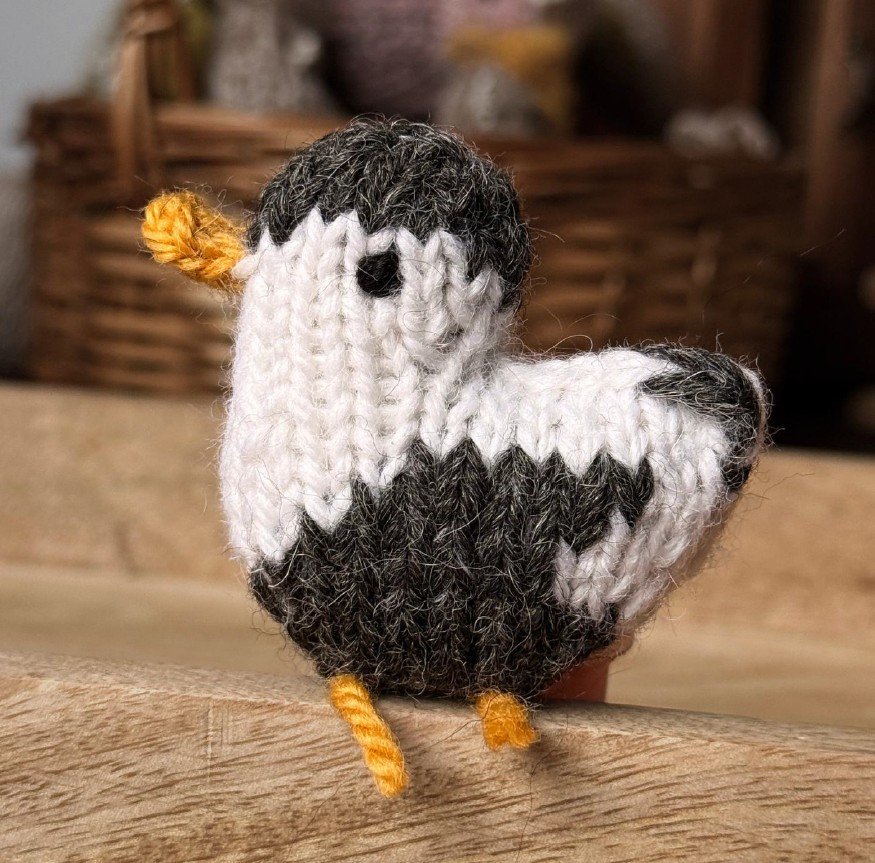
Image: Pocket Eider by Dominika. Free pattern for our KAL.
To create seamless 3D objects, you must master circular knitting on a miniature scale using Double Pointed Needles (DPNs) or the Magic Loop method.
The Technique: Circular knitting creates a continuous tube. When crafting small wildlife figures, managing your tension at the "joins" (the transition point between needles) is vital. Giving the second stitch on a new needle a firm tug prevents "ladders"—unsightly vertical gaps that allow stuffing to leak out.
The Biology: In nature, seamless strength is everywhere. A bird’s egg, a hollow bone, or a sea urchin's test (shell) are all built without seams to maximize structural integrity against external pressure.
How do we turn a straight knit tube into a curved beak, a sloped wing, or a rounded body? We use directional decreases as architectural pillars.
SSK (Slip, Slip, Knit): Creates a smooth, left-slanting line.
K2tog (Knit Two Together): Creates a crisp, right-slanting line.
The Application: By mirroring these decreases on opposite sides of your work, you manipulate the fabric's grain, mimicking the exact anatomical symmetry found in bilateral organisms (animals with matching left and right sides).
What goes inside your 3D sculpture determines its final posture and environmental footprint.
The Material: We advocate for using clean, raw wool roving or saved yarn scraps ("thrums") instead of synthetic polyester fiberfill. Wool has a natural "memory" and springiness that holds sculptural shapes permanently.
The Density: Just as a bird has hollow, lightweight bones to allow for flight, your sculptural stuffing should be firm but lightweight. Stuff the head firmly to support embroidered features, but leave the body slightly pliable so the piece can be dynamically posed.
Lesson 4:
The Canvas of Camouflage (Colorwork & Evolution)
Level: Intermediate to Advanced
Eco-Literacy Core: Evolutionary Biology & Predator-Prey Dynamics
This lesson focuses on the visual strategies animals use to survive. We teach the technical mechanics of managing multiple strands of yarn simultaneously while exploring the evolutionary biology behind natural patterns.
To create patterns inspired by animal coat variations, you must master the management of two yarn colors across a single row.
Yarn Dominance: When holding two colors, one strand will always sit slightly lower and closer to the needle joint, making it appear bolder and more prominent in the finished fabric. Always hold your primary design motif color in your left hand (or dominant position) and your background color in your right hand to keep your imagery crisp.
Catching Floats: When a color is not in use for more than 4 or 5 stitches, the unworked strand runs along the back of the fabric as a "float." If floats are too long, they catch on fingers or buttons; if they are too tight, they pucker the fabric. Learn to trap or "weave" your float every 3 stitches by wrapping the passive yarn over the active yarn before working the next stitch. This creates a flexible, insulated, double-thick fabric.
When designing your colorwork charts, choose a biological camouflage mechanism to guide your visuals:
Disruptive Coloration (The Zebra/Leopard Effect): High-contrast, irregular shapes that break up the outline of an animal's body, making it difficult for predators to gauge its size or direction. Translate this into a bold, non-repeating intarsia or stranded chart.
Countershading (The Marine Profile): Animals like penguins, sharks, and seabirds are dark on top (to blend with dark water or earth when viewed from above) and light on the bottom (to blend with the bright sky when viewed from below). Design a gradient garment that shifts smoothly from deep navy at the shoulders to soft cream at the hemline to showcase this evolutionary adaptation.
The Science of Illusion
Stranded Colorwork Mechanics
Material Characteristics
Transparent Supply Chains
Regenerative Land Sourcing
Lesson 5:
Soil to Needle Architecture
Level: All Levels
Eco-Literacy Core: Sustainable Agriculture & Land Stewardship
True conservation stewardship begins before the yarn ever hits your needles. This lesson traces your craft back to the soil, exploring how fiber selection plays an active role in global habitat protection and carbon sequestration.
Every fiber possesses distinct structural properties based on the animal or plant it evolved from:
Animal Proteids (Wool, Alpaca, Mohair): Wool fibers feature microscopic scales and a natural crimp (wave). This crimp traps air, providing high thermal insulation, elasticity, and excellent "memory" (the ability of a garment to spring back into shape after stretching).
Plant Cellulose (Linen, Hemp, Organic Cotton): These fibers lack scales and crimp. They are strong, smooth, highly breathable, and inelastic. They produce garments with beautiful, heavy drape but no structural bounce.
Design Application: Never substitute a high-elasticity wool pattern with 100% linen unless you want the garment to stretch out significantly over time and lose its structure.
As a consumer, your yarn choices directly impact land development and biodiversity.
The Environmental Threat: Traditional, high-intensity livestock farming can cause overgrazing, destroying topsoil, stripping natural vegetation, and driving out native wildlife.
The Regenerative Solution: We educate our community to support Climate-Beneficial Wool sourced from farms practicing rotational grazing. By moving sheep systematically across pastures, their hooves aerate the soil and their grazing stimulates deep root growth. This natural process helps pull carbon out of the atmosphere and lock it safely into the earth. Thriving, responsibly managed grasslands regenerate quickly, restoring vital nesting sites for ground-birds and supporting robust populations of native pollinators.
Lesson 6:
Pop Culture & Public Visibility.
Level: Advanced
Design Core: Pattern Architecture & Cultural Mechanics
Move beyond predictable design patterns. This lesson explores how to craft powerful textile statements that capture collective memory, engineering garments that transition from simple utility into cultural currency and unforgettable visual memes.
Every historic fashion artifact thrives on structural intentionality rather than arbitrary decoration, transforming a standard garment into a high-visibility "visual meme."
Visual Meme Engineering: To break through digital noise, a textile's primary silhouette, color blocking, or macro-texture must be instantly parsed and recognized from fifty feet away, on a low-resolution screen, or across a crowded public space.
The Three-Second Rule: If an observer cannot sketch the basic silhouette and color distribution of your garment from memory after a three-second glance, the layout contains excessive secondary data that dilutes its impact.
Design Application: When engineering a piece for public visibility, strip away complex micro-textures and low-contrast motifs in your primary focal zones. Prioritize bold, unambiguous geometries that read as a clear graphic signature before the viewer's eye even processes individual stitches.
Unforgettable pop-culture status is built stitch by stitch through deliberate technical choices that transform a functional knit into an anchor for storytelling.
Case Study A (The Explorer's Uniform - Cousteau's Red Beanie): Relies on an intense, high-saturation color choice combined with a tight, structural crown-decreasing rib pattern. This geometry forces the fabric to sit high on the head rather than slouching, maintaining a sharp, graphic silhouette under any camera angle.
Case Study B (The Heritage Frame - The Hail Mary Fox Cardigan): Rather than relying on subtle textures, this piece features a large-scale, high-contrast flat-knit fox motif on the torso. This flat graphic space is balanced by a thick, heavy fold-over shawl collar worked in a dense vertical rib, giving the garment structural weight and a distinct "lodge-style" architecture.
Design Application: When placing a bold, flat-knit graphic or intarsia motif on a garment, you must anchor it with heavy-gauge, high-density structural borders (like a substantial ribbed collar or wide button bands). Without this structural frame, the flat-knit graphic sections will sag, buckle, and lose their clean visual definition when the garment is worn.