


aud-og-eunge.-Fotograf-Guri-Dahl.-Norges-Verdensarvjpg (1)
#BirdColonyKAL

KNIT A SEABIRD
Build the colony.

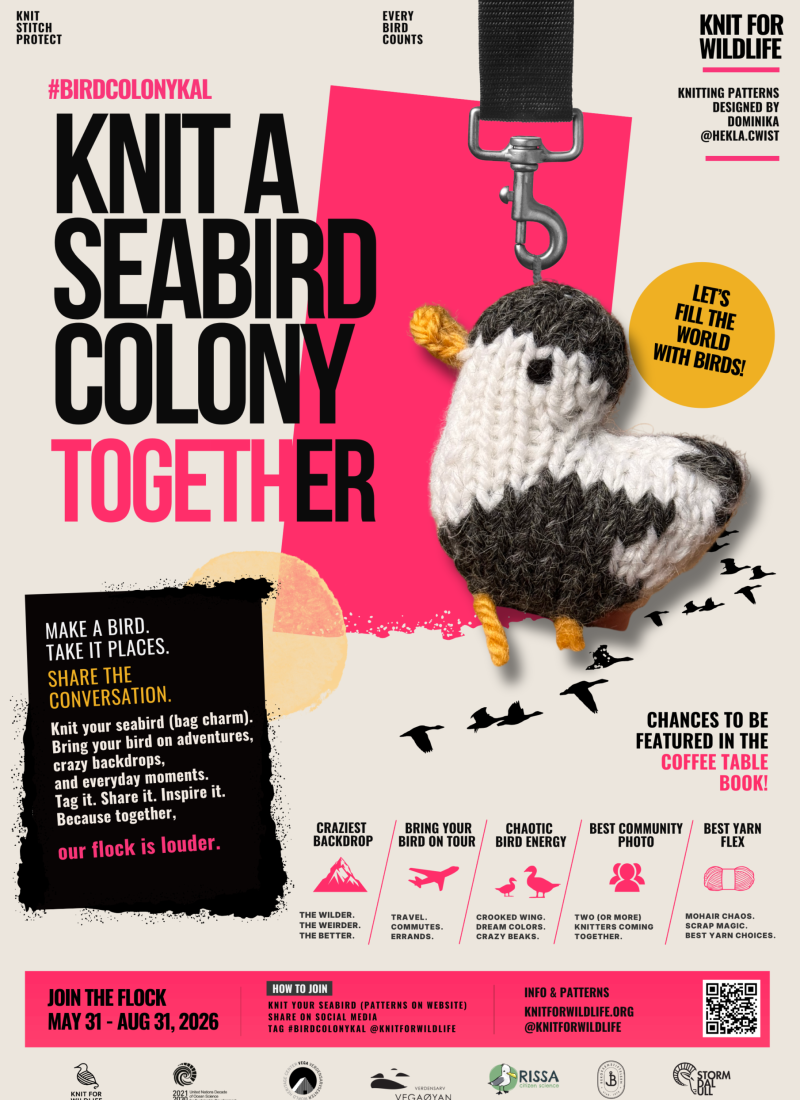
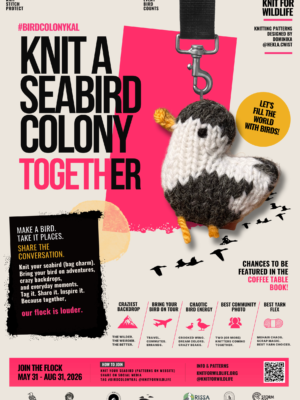
Welcome to our global summer Knit-Along (KAL)! This year, we are turning our collective creativity toward the rugged cliffs and coastal sanctuaries of our ocean-dwelling feathered friends. We are knitting tiny seabirds as bag charms and pooling our creations to build a massive, vibrant Digital Seabird Colony. Every bird cast on helps us celebrate these incredible species, spread vital marine eco-literacy, and showcase the power of a connected crafting community.

Through residencies, workshops, patterns, collaborations, and storytelling, we turn wildlife challenges into creative action.

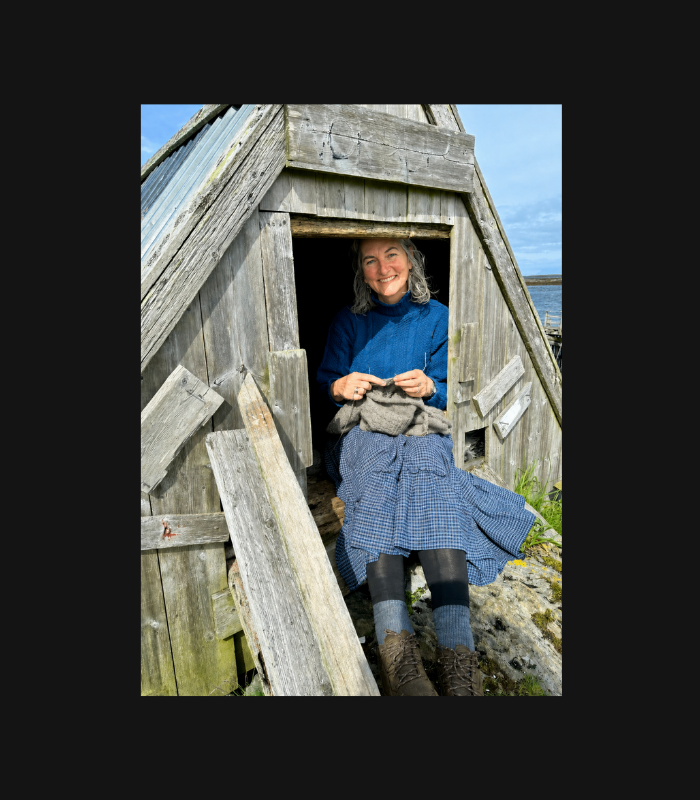
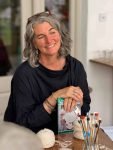
Photo credit: Guri Dahl/Vega World Heritage Centre

The Open-Access Patterns

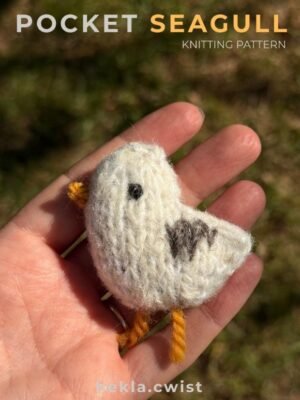
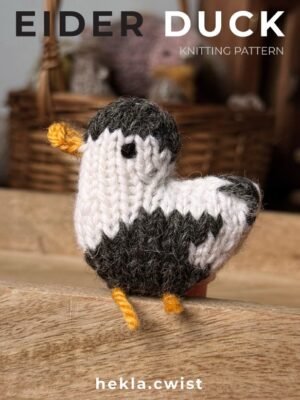
For this summer’s KAL, we are thrilled to partner with the incredibly talented designer Dominika (@hekla.cwist), who has designed two exclusive, pocket-sized open-access patterns just for us. They are quick to knit, endlessly customizable, and perfect for turning into backpack charms or keychains.

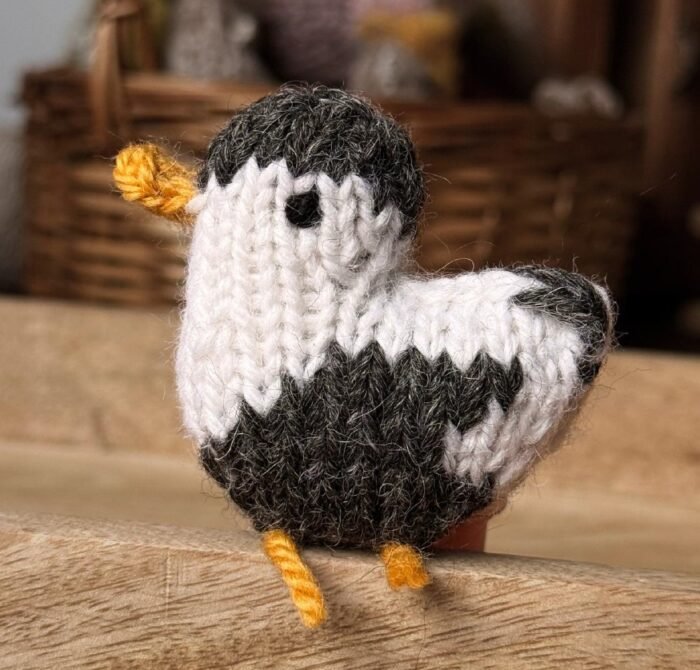
  • The Pocket Seagull: A cheeky, charming little character that reminds us of our daily connection to coastal wildlife.

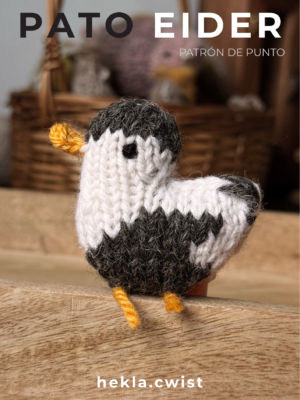
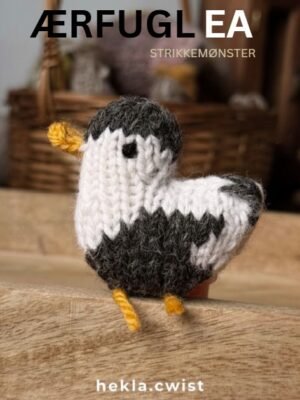
  • The Pocket Eider: A beautiful tribute to the iconic sea duck known for its incredibly warm down and resilient spirit.

How It Works: Build the Digital Colony

Our goal is to build a thriving digital ecosystem. For every seabird knitted and shared, we will "release" it into our interactive, online Digital Seabird Colony map, tracking our community’s global reach.

  1. Download either (or both!) of Dominika’s free pocket patterns.

  2. Knit your miniature seabird using your favorite scrap yarns.

  3. Snap a photo of your bird following one of our fun community categories.

  4. Share your photo on Instagram or Facebook using the hashtag #BirdColonyKAL and tag us @KnitForWildlife.

Share Your Bird!

We want to see your birds out in the wild! To keep the digital colony diverse and exciting, share your photos under one of these fun categories. The best submissions will be featured on our live gallery and might even make it into print!

  • Most Amazing Backdrop: Perched on a dramatic cliffside, sitting by the ocean, or nestled in a backyard jungle—show us the most stunning scenery your bird can find.

  • Community Knitting: Share photos of your local knitting group, family members, or friends all crafting their pocket birds together.

  • Bird on Tour: Commuting to work? Going on a summer road trip? Attending a festival? Clip your seabird charm to your bag and document its travels.

  • Silly Seabirds (Honorable Mention): Is your pocket seagull trying to steal a french fry? Let’s see your bird’s personality shine through!

Patterns

#BirdColonyKAL

KNITTED SEABIRDS 1%
1

Cause

?

Knitters

90

Days

#BirdColonyKAL

Q&A and Official Rules

To ensure we can safely share your beautiful imagery and build our digital colony, please read our quick guidelines below.

When does it take place?

The colony runs from June-August, with the official kickstart during Oslo Art Weekend.

Birds may continue appearing long after that though. Colonies tend to grow.

How do I join?
  1. Knit your seabird
  2. Photograph it somewhere in the world
  3. Tag @knitforwildlife
  4. Use #BirdColonyKAL

That’s it.


Do I have to pay for the patterns to join the KAL?

Not at all! In alignment with our core mission, these patterns by Dominika (@hekla.cwist) are completely open-access and free to download.

Do I need to follow the pattern?

Not at all.

We love strange birds, dramatic birds, oversized birds, elegant birds, suspicious-looking birds, and tiny chaotic creatures.

The pattern is only the starting point.

Red List!

The birds we are knitting aren't just beautiful designs—they represent real-world species navigating fragile environments. To weave marine science directly into our craft, we encourage you to add a literal "red thread" or small stitched detail to your finished bird. This red thread symbolizes the bird's official status on the conservation Red List (such as Near Threatened, Vulnerable, or Endangered). It’s a subtle but powerful visual conversation starter that brings the ocean literacy mission right into your local circle.

Want to check the official conservation status of the species you are knitting?

https://lister.artsdatabanken.no/rodlisteforarter/2021/

Can I knit more than one bird?

Absolutely. A colony needs hundreds of birds to thrive! Knit a whole flock, gift them to friends, and share as many photos as your creative heart desires.

What are the summer challenges?

Throughout the summer we’ll feature birds across different categories like:

  • Most Unhinged Backdrop
  • Main Character Bird
  • Bird on Tour
  • Best Yarn Flex
  • Most “Vega” Energy
  • Chaotic Bird Energy
  • Best Community Photo

Some featured birds may also become part of future exhibitions, storytelling, or our upcoming Vega cohort coffee table book.

How do you use the images we post with the hashtag?

By tagging your public photo with #BirdColonyKAL and tagging @KnitForWildlife, you grant us permission to feature your image in our digital colony gallery, across our social media channels and in other possible arenas for this mission. 

Did someone mention a Coffee Table Book?

Yes! We are currently curating a stunning, high-quality coffee table book celebrating the history of the Knit for Wildlife movement. High-resolution photos submitted under our UGC categories (especially Most Amazing Backdrop and Community Knitting) will be shortlisted for publication in the book! If your photo is selected for print, our team will contact you directly via DM or email to secure high-res files and formal print permissions.

START HERE

THE PATTERNS
several tweaks.

We are launching the digital colony with two foundational species: The Pocket Seagull and a special Pocket Eider Duck (Ea), custom-tailored by designer Dominika specifically for Knit for Wildlife.

These patterns are designed to be beginner-friendly, portable, adaptable, and absolutely perfect for using up your scrap yarn! But they are also just the starting point. We want you to experiment and co-create a truly diverse colony with us. With just a few simple tweaks; like lengthening the bill to make a Curlew, or using fuzzy mohair or merino wool to create fluffy chicks - you can bring entirely new species to life.

Make one bird. Or twenty. Let’s see how diverse we can make this colony together!

Patterns by @hekla.cwist

The Designer: Dominika

Hi! I’m Dominika, the maker behind hekla.cwist.

I create simple, beginner-friendly knitting patterns designed to leave room for creativity, play and imperfection. My tiny birds and pocket-sized companions are meant to feel calming, approachable and a little bit comforting on louder days.

Nature - especially birds - has always been very close to my heart. I try to support wildlife awareness and bird rescue initiatives whenever I can. Many of my projects are inspired by small everyday encounters with urban birds, seaside gulls, woodland creatures and long walks with my dog, Broccoli.

I love creating things that are a little weird, soft and imperfect - tiny knitted worlds that hopefully make people smile and slow down for a moment.

Beginners tips

New to small-scale knitting?

A few things help immediately:

  • Use slightly tighter tension than usual
  • Lightweight stuffing gives cleaner shape
  • Embroidery details create personality
  • Small colour shifts make birds feel unique

And remember: Slightly strange birds are often the best birds.

More personality

The pattern is only the starting point.

Try experimenting with:

  • different beaks
  • exaggerated eyes
  • textured wings
  • local yarn
  • visible repair
  • tiny accessories
  • species-inspired colour palettes

You can create:

  • puffins
  • gulls
  • eiders
  • fantasy seabirds
  • hyper-realistic birds
  • chaotic little creatures

We encourage interpretation.

Sharing the Story

A tiny knitted seabird on a backpack can sometimes start more conversations than a campaign poster.

Staying Calm

SUMMER CHALLENGES

LET THE BIRDS ESCAPE
into the world.

This is where the colony gets slightly out of hand.

Throughout the summer, we’ll spotlight favourite birds, strange adventures, beautiful yarn choices, chaotic personalities, and unforgettable backdrops from the community. Some submissions may even end up featured in our upcoming coffee table book alongside residency patterns, seabird photography, bird tender stories, and wildlife essays.

So yes. Your tiny knitted bird could suddenly end up in an exhibition, a printed book, or somewhere in Knit for Wildlife history.

What are we looking for?

We are looking for:

  • atmosphere
  • humour
  • storytelling
  • strong visuals
  • strange moments
  • personality
  • beautiful textures
  • memorable locations
  • community energy

The birds with the most soul usually win.

Photo tips from us

Honestly?
Phone photos are completely fine.

But:

  • Natural light helps a lot
  • Movement creates atmosphere
  • Dramatic weather always works
  • Hands make photos feel human
  • Close-ups often feel stronger than distance
  • Unexpected locations instantly stand out

And tiny birds somehow become much funnier when photographed seriously.

Where might my bird end up

Selected submissions may appear across:

  • Our social media
  • Exhibitions
  • Project presentations
  • Press features
  • Digital galleries
  • and potentially the upcoming coffee table book

Full credit will always be given whenever possible. If larger editorial use becomes relevant, we may contact you separately.

Categories for Extra Feature

START HERE

THE COLONY
x 3 lanuages.

The colony begins with the Pocket Seagull. Designer Dominika has also tailored a special Pocket Eider Duck version for "Knit for Wildlife". The patterns are designed to be: Beginner friendly, portable, adaptable and perfect for scrap yarn.

Make one bird. Or twenty. Let's co-create a diverse colony!

Patterns by @hekla.cwist

The Designer: Dominika

Hi! I’m Dominika, the maker behind hekla.cwist.

I create simple, beginner-friendly knitting patterns designed to leave room for creativity, play and imperfection. My tiny birds and pocket-sized companions are meant to feel calming, approachable and a little bit comforting on louder days.

Nature - especially birds - has always been very close to my heart. I try to support wildlife awareness and bird rescue initiatives whenever I can. Many of my projects are inspired by small everyday encounters with urban birds, seaside gulls, woodland creatures and long walks with my dog, Broccoli.

I love creating things that are a little weird, soft and imperfect - tiny knitted worlds that hopefully make people smile and slow down for a moment.

BEGINNER TIPS

New to small-scale knitting?

A few things help immediately:

  • Use slightly tighter tension than usual
  • Lightweight stuffing gives cleaner shape
  • Embroidery details create personality
  • Small colour shifts make birds feel unique

And remember: Slightly strange birds are often the best birds.

MORE PERSONALITY

The pattern is only the starting point.

Try experimenting with:

  • different beaks
  • exaggerated eyes
  • textured wings
  • local yarn
  • visible repair
  • tiny accessories
  • species-inspired colour palettes

You can create:

  • puffins
  • gulls
  • eiders
  • fantasy seabirds
  • hyper-realistic birds
  • chaotic little creatures

We encourage interpretation.

PERFECT FOR

Scrap yarn, gifts, beginners, travel knitting, bag charms.
Staying Calm

When things don’t go as planned, I tell myself one simple thing: relax. Nine times out of ten, that’s exactly what I need to calm down. Panic or resistance only burns through oxygen faster, making the situation far more dangerous. Staying calm and conserving energy is what keeps me safe.

Trust Your Preparation

In heavy surf, hesitation can be dangerous. When doubt surfaces, Christa reminds herself of every drill, swim, and safety course that got her there. This reframe is called “recalling mastery experiences” — a proven method to shift the brain from fear to competence. Try it: When doubt appears, say out loud one skill or drill you’ve mastered, and let that memory guide your next move.

Checklist for Focus

Christa found that lists are her strongest tool for cutting through chaos. Writing down three concrete tasks reduces mental noise and prevents scattered attention. Neuroscience shows that “externalizing” tasks lowers cognitive load, freeing the brain for higher-level decisions. Try it: Write three items you must finish, complete them in order, and don’t add new ones until they’re done.