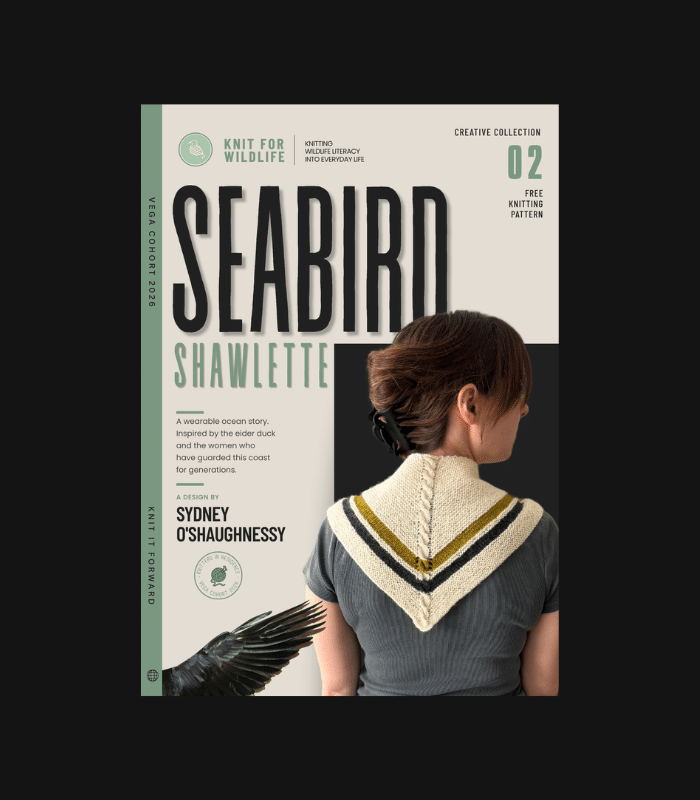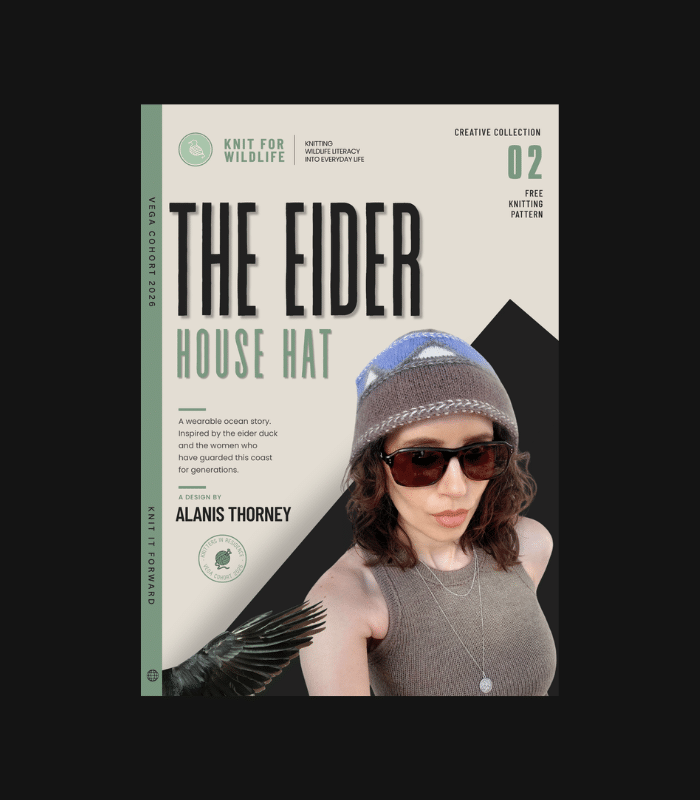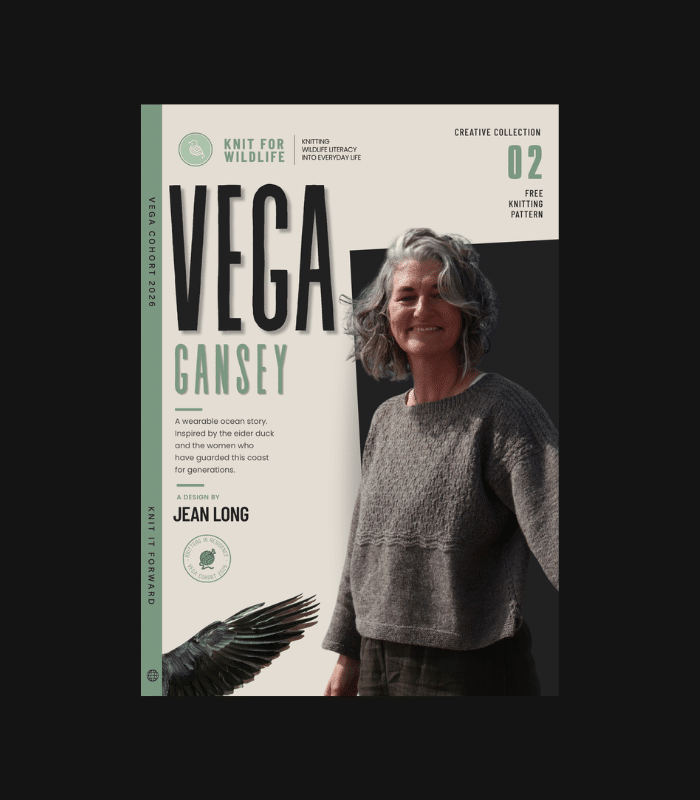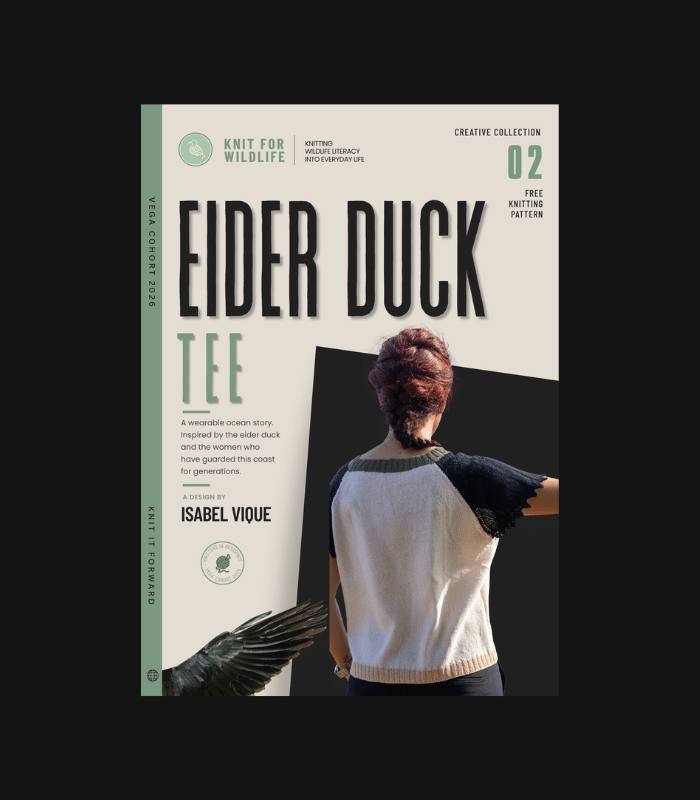




From the last "knitters in residence" cohort
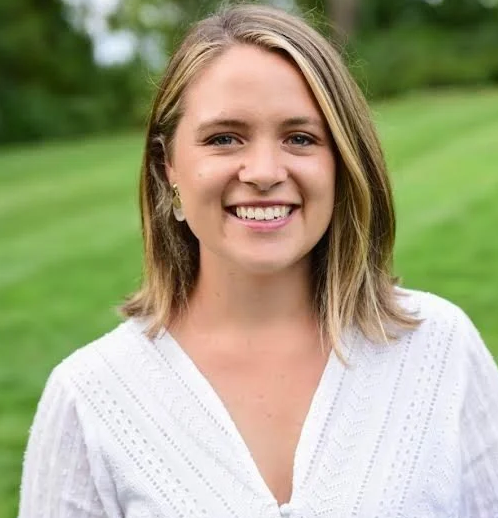
I’m Molly, from Indiana USA. I started Wool & Cottage in 2018 after moving to a small farm town as a way to meet people. With a background in education, I began teaching knitting classes in local coffee shops, which naturally turned into a space for connection.
Over time, knitting became a lot more than just something I taught – it became something I relied on. After having my daughters, I experienced postpartum depression, and knitting was one of the few things that felt steady during that time. I could feel a difference after sitting down to knit, even for a short while.
That’s really where Knitting Wellness came from. It’s an extension of what I was already doing, but with more intention around sharing how knitting supports the mind, not just how to do it. The whole purpose has been to share how knitting and similar crafts can positively impact your mind in great seasons and hard ones, too.
I think people are often looking for something steady and predictable.
Knitting gives you something simple to focus on when everything else feels a little overwhelming. It doesn’t demand too much, but it gives your mind somewhere to go. There’s a beginning, a middle, and an end – and that structure can feel really grounding especially when life doesn’t feel structured.
At first, it’s usually just learning – and there is a learning curve. Knitting isn’t necessarily an easy skill right away. You’re figuring out how to hold the needles, how the stitches work, and how everything comes together.
But it’s also a really rewarding skill to learn. It gives back in a lot of ways – not just through the finished project, but through community, creativity, and even some unexpected life lessons.
I’ve seen that in so many different settings. Teaching in preschools where kids are simply exploring yarn and learning how it’s made, to working with women in halfway houses who have shared that knitting helped them reduce harmful habits and gave them something meaningful to focus on. I’ve also been part of community events where entire spaces are covered in knit and crochet pieces, and even beginners are laughing, connecting, and enjoying the process – mistakes and all.
Some people pick it up quickly, others take more time, but over time, the changes start to look similar.
People begin to slow down a bit. Those who stick with it become more patient with themselves. They build confidence. And a lot of people start to look forward to that time – even if it’s just a few minutes in their day!
It becomes less about the project, more about having something steady to return to.
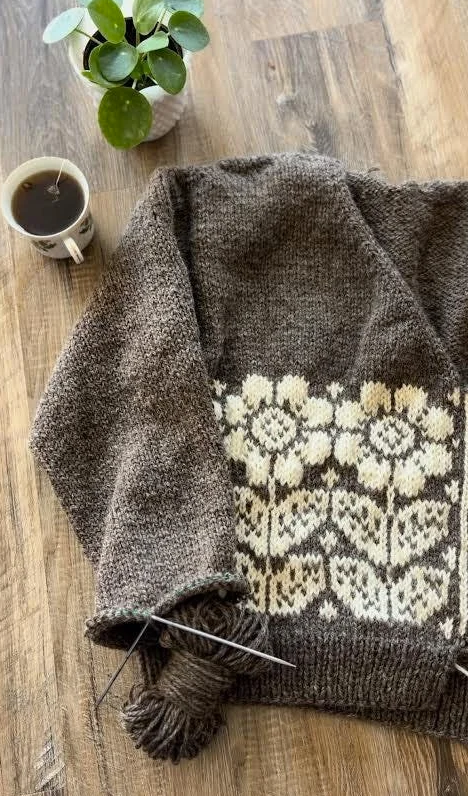
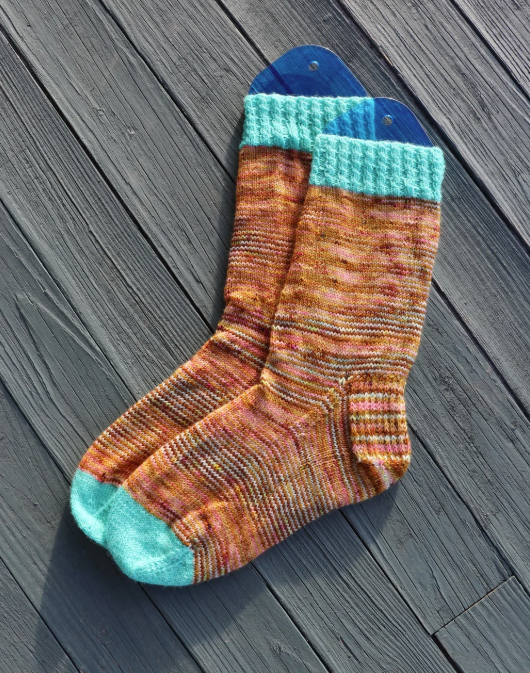
I don’t really think it has to compete – it just offers something different!
Scrolling or watching something like Netflix can feel like a break, but it doesn’t always leave you feeling better afterward (if you’re tired). There’s actually been a lot of research showing that really passive things – especially what people call “doom scrolling” – can leave you feeling more mentally drained.
Doom scrolling is basically when you keep scrolling through content that’s kind of negative or overwhelming – news, social media, just a constant stream of information – even when you know it’s not helping. It’s easy to fall into, but it doesn’t usually feel very good afterward.
Knitting is just a different kind of rest. You’re still sitting and slowing down, but your hands are doing something, so your mind isn’t taking in more and more input.
There’s also research showing that repetitive activities like knitting can help shift your body into a calmer state – activating that relaxation response. You’ll see that reflected in work from Harvard Health Publishing, Mayo Clinic, and the American Psychological Association, which also highlights how constant digital input can be a lot for the brain, even when it feels like you’re “resting.”
There’s also been some really interesting work around something called craft psychology, with research by Dr. Anne Kirketerp. It builds a lot on what’s already been studied in occupational therapy and art therapy – basically looking at how hands-on, creative work helps with focus, regulation, and overall well-being.
So it’s not that one is better than the other – it’s just a different kind of reset when you’re tired.
For me, even a few rows of knitting can feel more restorative than a long scroll, because my mind actually gets a place to land instead of more to take in.
Knitting fits into dopamine in a really steady, realistic way. It’s not a big spike – it’s more gradual. Every row, every section, every finished piece gives you a small sense of progress. And that feels really different from the kind of instant gratification we’re surrounded by now.
There is research showing that creative activities like knitting can support the brain’s reward system over time. Studies published in the British Journal of Occupational Therapy have linked knitting and similar crafts to improved mood and a sense of purpose, which makes sense when you think about that steady progress.
Even something as small as finishing a row matters. You can see it, you can feel it, and it gives your brain that little signal that you’re moving forward.
And then there’s the community side of it. If you’re knitting with others – whether that’s in person, in a knit-along, or even just sharing online – there’s another layer there. You’re connecting and creating.
That’s something that’s been studied, too – social connection and well-being – including research supported by the American Psychological Association.
There’s also the idea of flow state – when you get really absorbed in what you’re doing – which has been studied quite a bit in psychology and is linked to feeling more satisfied and less stressed.
So I don’t really think of it as “chasing dopamine.” It’s more like building these small, steady moments of progress and connection that add up over time.
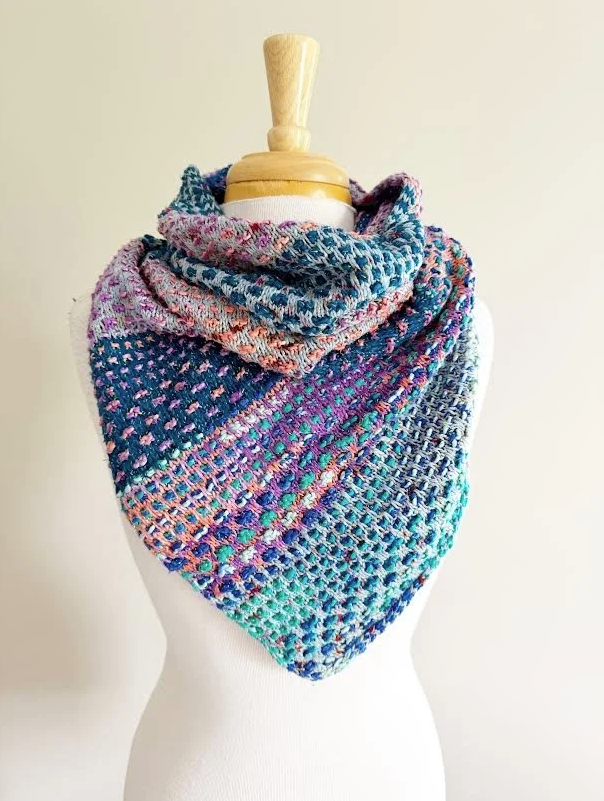
Because you can see it! It’s very tangible.
So much of life can be invisible effort. With knitting, you can physically see something growing in your hands. Even a single row is proof that you moved something forward, and that feels meaningful.
Yes – simpler, more repetitive patterns like stockinette, garter, or seed stitch tend to be the most calming.
Once you don’t have to think as much about what you’re doing, your hands can take over a bit and your mind can settle. That’s usually where that really calming feeling, or flow state, comes from.
But there’s also a place for more detailed projects. Things like colorwork, assigned pooling, cables, or lace can be really helpful when you need something to fully focus on.
And over time, even those “harder” techniques become calming in their own way. The more you work through them, the more familiar they feel, and you start to find a rhythm there too.
So it really depends on what you need in the moment.
I usually like to have both – something a little more “mindless” for busy days, and something else that helps me focus when I have the space for it.
I think it absolutely can.
Natural fibers just feel different – a little more rustic, and if you’re working with wool, a little more “woolly.” There’s something about the texture, the warmth, and even just knowing where it comes from that helps people connect to it in a different way. It can make the whole process feel a bit more intentional.
Sometimes you’ll even find little bits of hay – or what farmers jokingly call “breakfast” – still in the yarn, and that kind of adds to it. It’s a small reminder that this came from something real.
But at the same time, I think a lot of the connection comes from the act of making something by hand, no matter what you’re using.
If it’s a material you enjoy and feel good working with, that’s what really matters.
Usually when I need to slow down or reset.
At the end of the day, during moments like car line waiting to pick up my kids, or anytime I feel like I need a break – it gives me something steady to come back to.
In the mornings, I’ll often knit while I pray, and that’s a really important time for me. It’s grounding, and it helps me start the day in a better place.
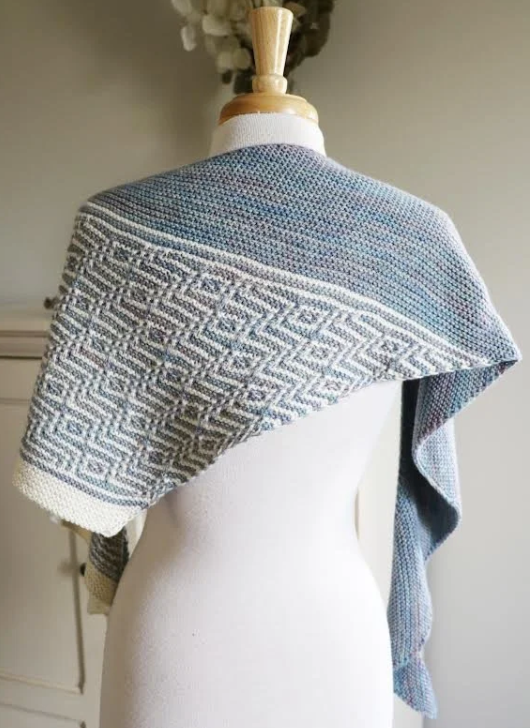
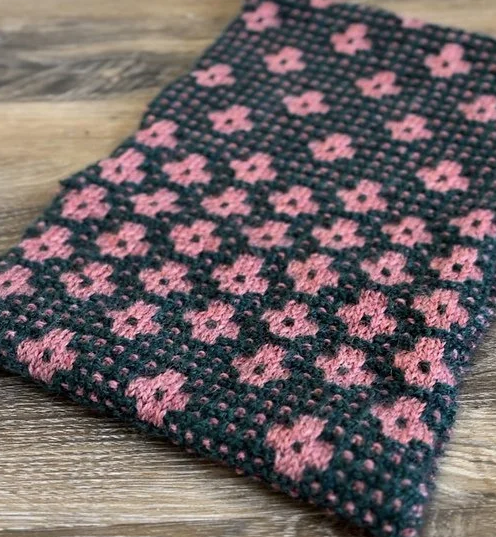
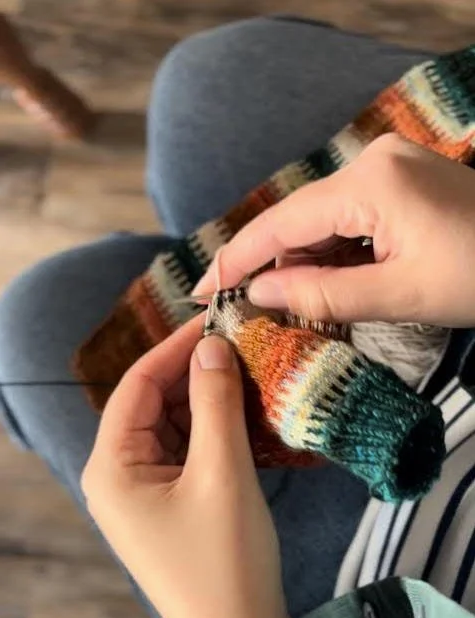
It has! When I first learned as a teenager, it was something I picked up occasionally, and I was mostly focused on the project and the end result.
Now it’s part of my daily life, and the focus has shifted more to how it makes me feel while I’m doing it.
It’s become both a creative outlet and something that really supports my mental health.
Some of my closest friendships have come from knitting – I met some of my best friends through a knitting circle in the next town over, and that’s been one of the most meaningful parts of it.
I’ve also met people through yarn and wool festivals, online, and in person. Knitting has really become a pathway to community for me, and that alone has been a huge shift.
Start small. Even just learning the knit stitch and practicing for a few minutes is enough. It doesn’t have to be a full project right away. Let it be something simple and low-pressure.
And if it starts to feel frustrating, go back to what drew you in! The colors, the textures, the patterns. There are so many different parts of knitting, and it’s okay if it doesn’t all make sense at first.
If you decide to stick with it, the return on that time is so worth it – beyond just beautiful projects. It opens the door to community, builds patience, and teaches a lot of life lessons along the way.
It really is like learning a new language. The more you sit with it and come back to it, the less overwhelming it feels. There is a lot to learn in the beginning – I remember walking into a yarn shop and feeling completely overwhelmed by all the yarn weights, not even knowing where to start. But over time, it starts to click.
I’d also really encourage people to plug into some kind of community. A local yarn shop, a festival, a class, or even an online group can make a huge difference. In person always has my vote, but online is a really great place to start too.
& That’s actually part of what Knitting Wellness has become – a place where I try to point people toward different resources, ideas, and things happening in the knitting world.
You learn it one stitch at a time, but you don’t have to figure it out alone!
There are a lot of things that distract or entertain, but knitting gives you something steady to return to – something that supports you while you’re doing it, not just after.
It helps you gather your thoughts. It gives you a place to come back to yourself.
There’s something about it that creates a kind of stillness – even though your hands are moving. It can feel almost meditative, like a quiet “be still” moment in the middle of everything else. And taking that time to be still can help you move forward more clearly.
At the same time, knitting isn’t perfect.
There are sessions that feel frustrating – dropped stitches, pulling out hours of work, even things like stopping for wrist pain. That can all be part of it, too.
But that’s where something deeper comes in. It gives you the chance to notice how you react, to listen to your body, and to respond a little more gently. To stop being so hard on yourself when mistakes happen.
For me, knitting has been one of those ways to return to a better place – not perfectly, but consistently.
————————
Read more about Molly here:
From the last "knitters in residence" cohort
No account yet?
Create an AccountAccount nr: 4910 20 37951
IBAN-nr: NO1449102037951
SWIFT/BIC: SNOWNO22
Adress; SpareBank 1 Nord-Norge, Storgata 65, Tromsø, Norway