CO-FLOURISH INITIATIVE

WILDLIFE STORIES
Knitted differently.

Our conservation work is where the needle meets the mud. Through our open-access framework, we use kmitting as a tool for wildlife literacy, field research support, and ecosystem preservation. When you download a pattern, you are connecting directly with active conservation projects around the globe.

Through residencies, workshops, patterns, collaborations, and storytelling, we turn wildlife challenges into creative action.

Citizen Science & Data Translation

We partner with wildlife organizations to turn real ecological data into knitting charts. Whether it’s tracking the decline of a bird population through colorwork or mapping temperature changes in stitch counts, our projects visually represent pressing environmental issues.

Grassroots Advocacy

Because our patterns are open-access, they reach a global community. We mobilize this network to raise awareness for critical, time-sensitive conservation campaigns. Such as protecting local wetlands, funding wildlife corridors, and advocating for endangered species legislation.

Ethical Fiber Sourcing

True conservation starts with the materials we use. We educate our community on the ecological footprint of textiles, promoting biodiversity by supporting sheep breeds that help regenerate degraded landscapes and advocating for sustainable, pesticide-free wool production.

"True conservation requires us to look at the whole ecosystem. By choosing sustainable fibers and stitching the stories of endangered wildlife, our community weaves a safety net for the planet's most vulnerable habitats."

KNITTERS IN RESIDENCE

WHERE WILDLIFE
Becomes Patterns.

Selected knitters collaborate with scientists, photographers, conservationists, and local communities. Together they translate species, landscapes, textures, and stories into knitting patterns, workshops, and visual storytelling.

Each cohort focuses on a different wildlife challenge or ecosystem.

Cohorts

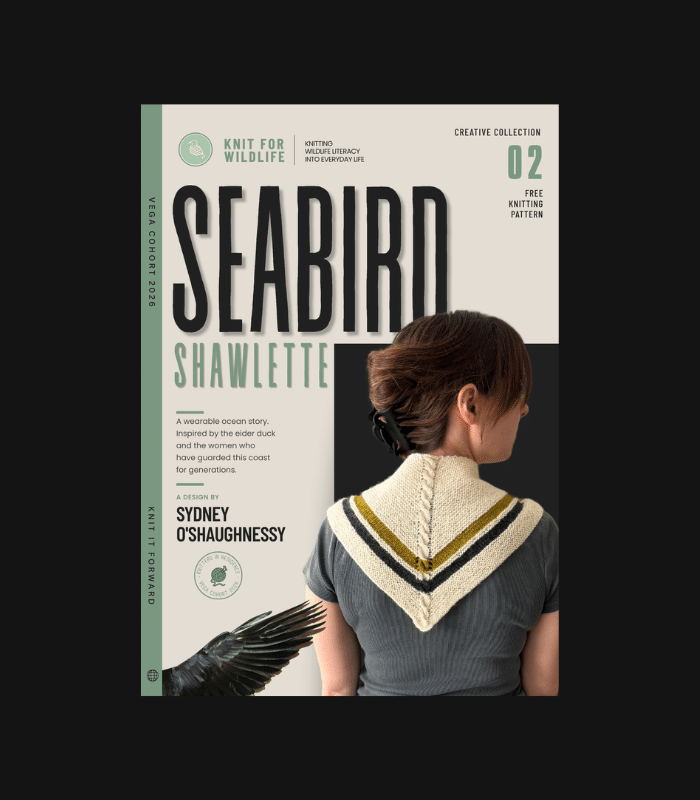
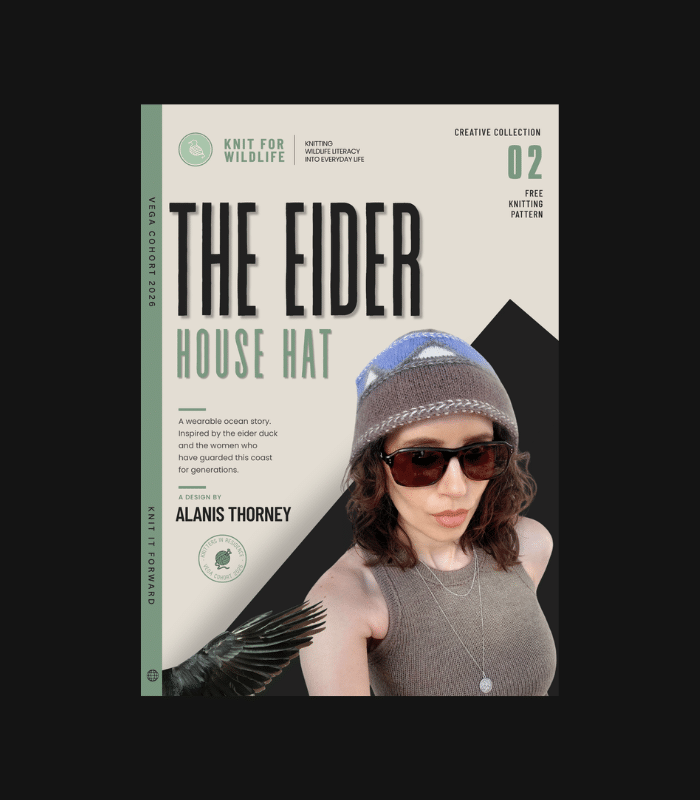
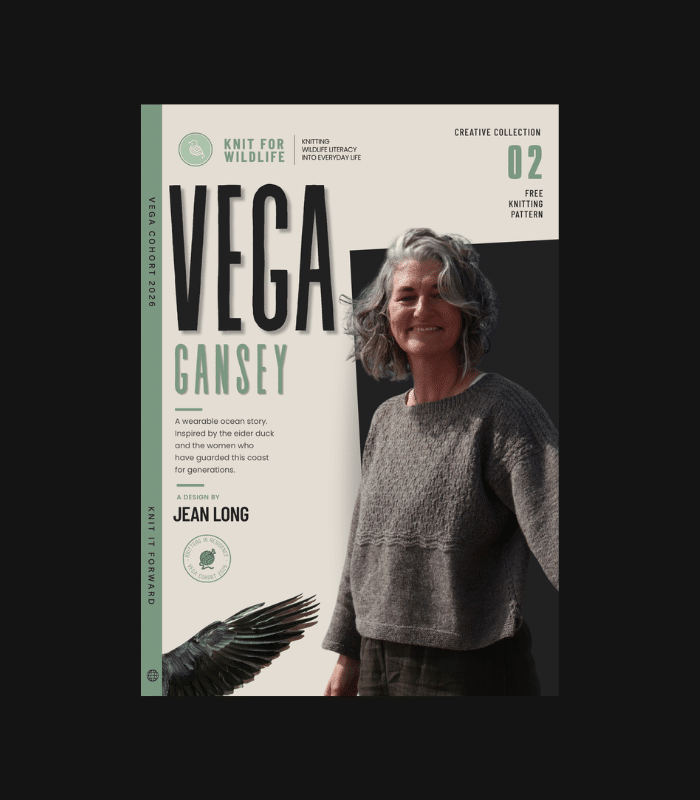
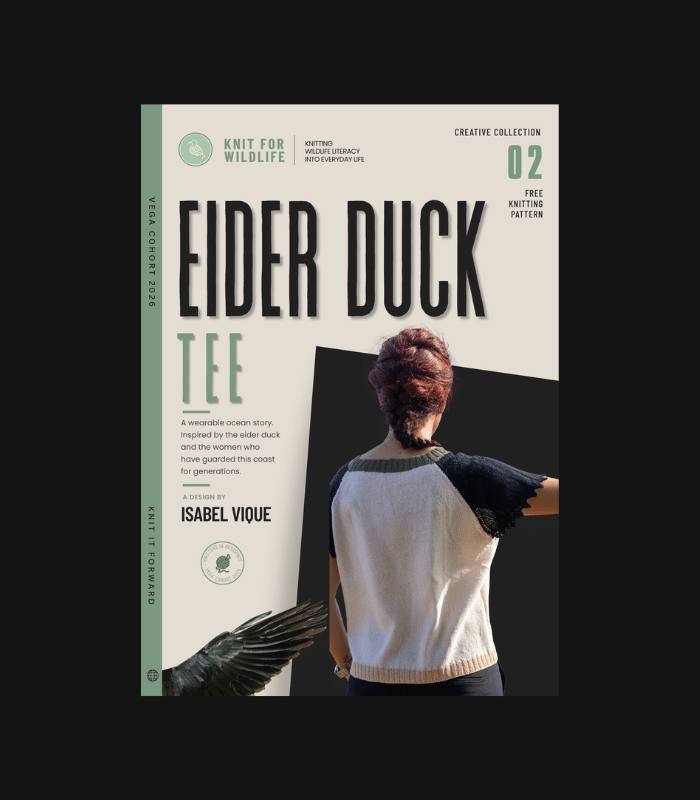
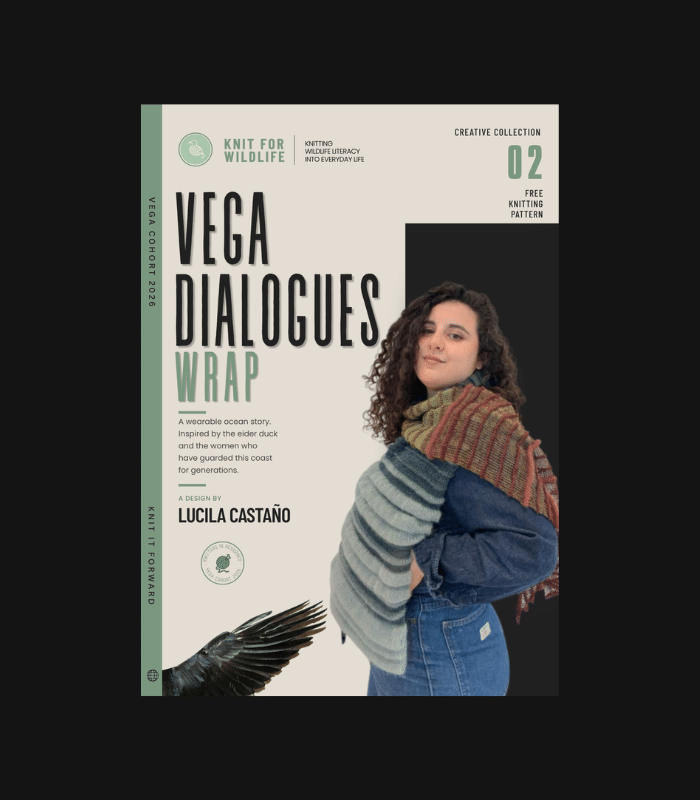
Each cohort has a theme, location, or species focus. The first pilot worked with Love The Oceans. The current cohort explores Vega World Heritage, seabirds, and eider traditions.

Apply Later

Future cohorts will open for knitters who want to work with wildlife stories through their craft.

 
What We Create

Patterns, process posts, interviews, workshops, exhibitions, digital collections, and community projects.

 
Who We Work With

Scientists, conservation groups, local knowledge holders, photographers, designers, and knitting communities.


Species

Every cohort starts with a species, ecosystem, or conservation challenge.

Story

We look for the human story around wildlife: Care, conflict, culture, loss, repair, or hope.

Translation

Textures, behaviours, colours, habitats, and field knowledge become design references.
Subtitle text example

CONSERVATION STORIES

Bird Tenders

On Vega, people have built shelters for eider ducks for generations. After nesting, the birds leave behind eiderdown. This relationship between people and birds is rare, practical, and deeply rooted in place.

Seabirds. Eider traditions. Cultural heritage in decline.

→ Meet the cohort
→ Explore patterns
→ Join the knitalong

Bird tenders on Vega collecting eider down traditions before knowledge disappears. 

Knit for Penguins

After oil spills, penguin rescue centres have used knitted jumpers to help protect birds during rehabilitation and to raise awareness and funds. A small garment became a global conservation story. How knitted sweaters became part of oil spill rescue efforts.

→ Wildlife story
→ Conservation spotlight
→ Penguin-inspired pattern

Penguins rescued after oil spills wearing knitted rehabilitation sweaters.

Koala Care

During Australian bushfires, craft communities helped wildlife carers with handmade items for injured animals. Knitting and sewing became part of a wider emergency response.

Craft communities responding to wildlife rescue after Australian bushfires.

→ Story archive
→ Community action
→ Future collaborations

Wildlife rescue groups supported by global knitting communities.

Christa Funk: Photographing extreme surf waves

"Life can be so weird, it can be long and but it can also be short; that's why its important to pursue our passions and what makes us truly happy in life. Life gets to everybody in different ways. It’s getting knocked down and trying to figure out how to get up again, back into the light".


The new documentary First in, Last Out features Funk's unwavering determination to do everything necessary to get the ideal shot; to train, study, push through the pain, to put the time in, and to draw on the inspiration of her loved ones. It's a story about the raw human experience of triumph through grief and perseverance with grace in the eyes of chasing big dreams.

https://www.redbull.com/int-en/films/christa-funk-first-in-last-out

Nina Jensen: CEO REV Ocean
Samuel Massie: Explorer & TV host
Accordion title. Click here to edit

Click here to change this text. Ac non ac hac ullamcorper rhoncus velit maecenas convallis torquent elit accumsan eu est pulvinar pretium congue a vestibulum suspendisse scelerisque condimentum parturient quam.Aliquet faucibus condimentum amet nam a nascetur suspendisse habitant a mollis senectus suscipit a vestibulum primis molestie parturient aptent nisi aenean.A scelerisque quam consectetur condimentum risus lobortis cum dignissim mi fusce primis rhoncus a rhoncus bibendum parturient condimentum odio a justo a et mollis pulvinar venenatis metus sodales elementum.Parturient ullamcorper natoque mi sagittis a nibh nisi a suspendisse a.

EXPLORE CONSERVATION

Choose a story, residency, or initiative to explore.

Why conservation needs culture too

Most people will never read scientific papers about seabird decline. But they may: Knit a bird, wear a sweater, share a photo, join a workshop, and become curious about a species. Culture shapes attention.

Wildlife has always influenced knitwear

Nature has inspired knitting for centuries. Traditional knitwear borrowed from: Ropes, waves, fish scales, feathers, weather patterns, coastal landscapes. Wildlife and textiles have always been connected. Knit for Wildlife simply makes that connection visible again.

Knitting naturally slows the nervous system

The repetitive movement involved in knitting has been linked to reduced stress levels and improved emotional regulation. Many knitters describe the same effects: Calmer breathing, stronger focus, reduced mental noise and easier concentration. That slower pace also changes how we observe the world around us.
RIPPLE EFFEFCT

SMALL ACTIONS.
Real connection

Not everyone becomes a marine biologist, wildlife rehabilitator, or activist. But creativity can still create connection. Knitting slows us down. Makes us observe. Share stories. Gather people. Raise money. Preserve traditions. Start conversations.

Sometimes conservation begins with simply caring enough to make something by hand.

Join the #BirdColonyKAL

SUMMER KNITALONG
Knit a Seabird

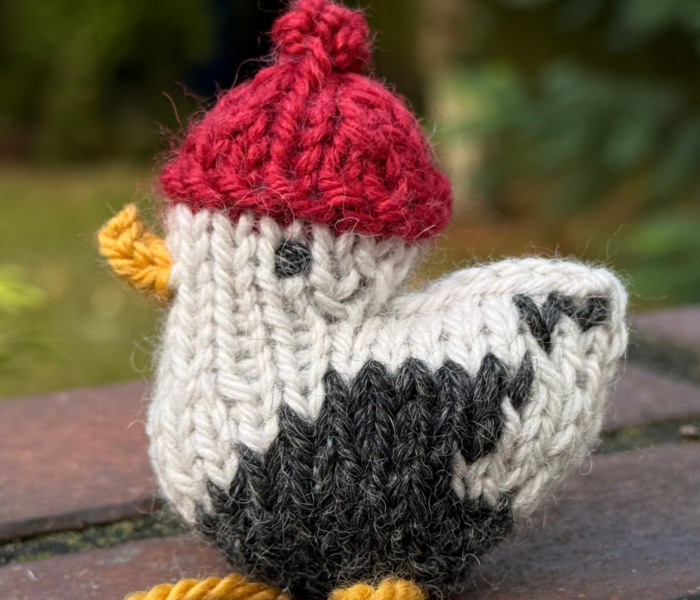
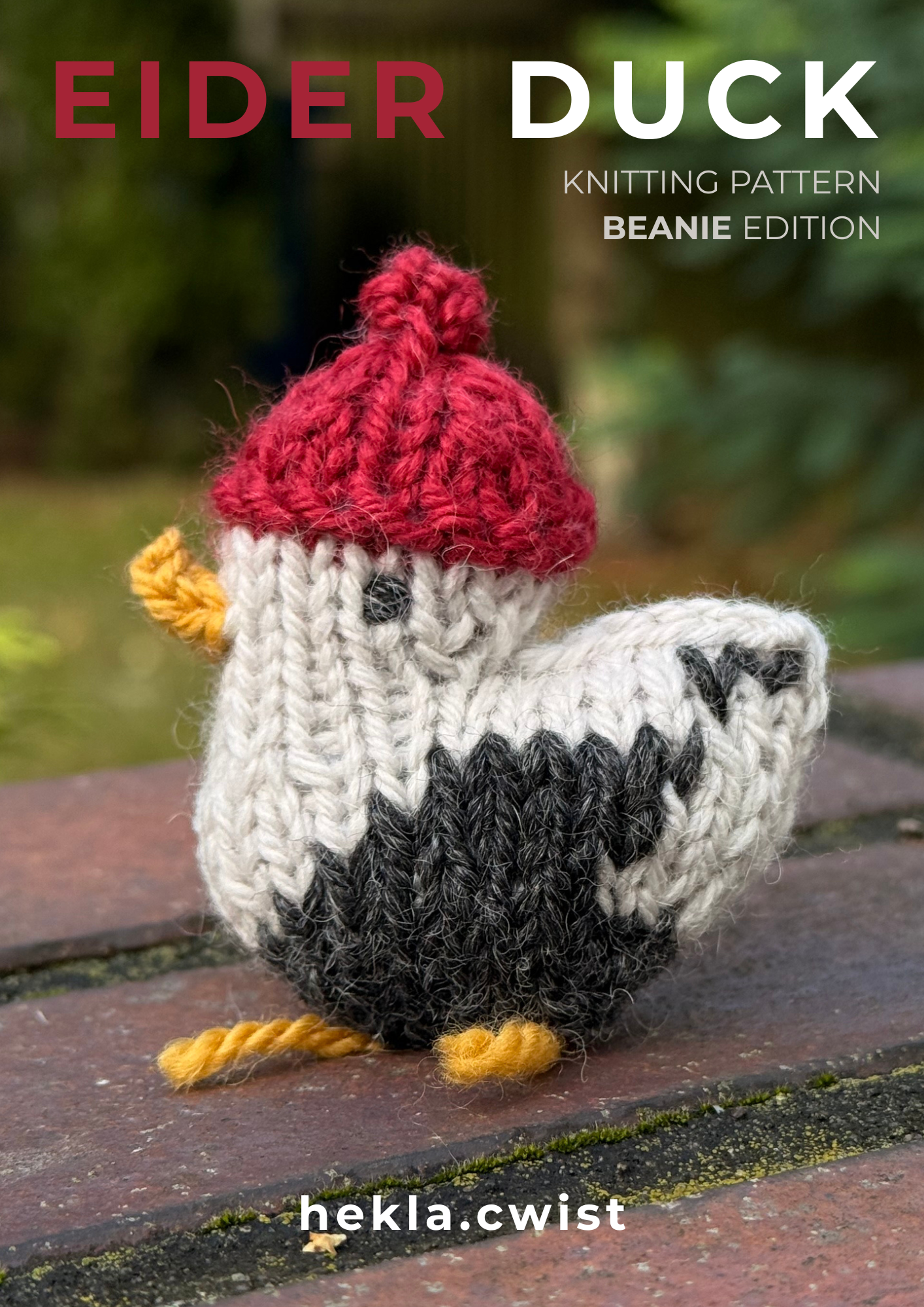
Welcome to our global summer Knit-Along (KAL)! This year, we are turning our collective creativity toward the rugged cliffs and coastal sanctuaries of our ocean-dwelling feathered friends. We are knitting tiny seabirds as bag charms and pooling our creations to build a massive, vibrant Digital Seabird Colony. Every bird cast on helps us celebrate these incredible species, spread vital marine eco-literacy, and showcase the power of a connected crafting community.

Grab your scrap yarn, call your knitting circle, and let’s start nesting!

Image & Patterns: @hekla.cwist

Why tiny projects are perfect summer knitting

You can knit: On ferries, in cafés, on hikes, at festivals, on beaches, and during road trips. A small seabird becomes easy to bring everywhere . Which is exactly why these projects spread so naturally through community and social media.

The best yarns for pocket-sized birds

Tiny knitted creatures usually look better with yarns that hold shape and texture clearly. Wool-heavy yarns often create: Stronger stitch definition, cleaner shaping, more personality, and better structure. Slightly fuzzy or rustic yarns can also make birds feel more “alive,” especially for seabird-inspired textures. Scrap yarn often works best.

The Science of Purpose

Forskning fra Harvard kaller det “The Science of Purpose”: Elever som finner en personlig mening lærer raskere, fullfører mer og føler seg bedre. Derfor står drømmer i sentrum. De er mer enn visjoner. De er drivstoff.
Button

Øvelse

Liten pustepause: Sett deg godt, lukk øynene og tenk på én ting du virkelig vil oppnå. Pust inn på fire, hold to, pust ut på seks. Slik starter vi ofte Drømmejakten. En enkel re-set som alle kan få til.

Overraskelse

Visste du at hjernen frigjør dopamin bare av å visualisere en drøm? Det gir samme «kick» som å nå små mål. Derfor trener vi på å se for oss drømmen tydelig - det gjør veien dit kortere.
Why this exists

DISTANT ISSUES
Becomes personal.

Conservation communication often struggles with distance. Species decline becomes numbers. Habitats become statistics. Climate change becomes abstraction. But humans usually connect through stories, symbols, objects, identity, and emotion. A knitted seabird hanging from a backpack may sound small. But small objects can create surprisingly powerful conversations.

This initiative exists to explore how wildlife stories can move into everyday culture instead of staying only inside reports, museums, documentaries, or academic spaces.

What is wildlife literacy?

Wildlife literacy is about far more than recognising species names or memorising scientific facts. At its core, it is about learning how to notice the natural world with more attention and understanding.

That can include recognising ecosystems, understanding relationships between species, noticing environmental change, or becoming more aware of how culture and landscapes connect. But wildlife literacy is also emotional. Many people become interested in conservation long before they know scientific terminology.

Often, it begins with fascination.

A photograph, a documentary, a landscape, a childhood memory, or a species someone suddenly starts noticing everywhere. Sometimes even a garment or handmade object can become an entry point into curiosity.

Wildlife literacy grows through a combination of:

  • observation
  • storytelling
  • cultural traditions
  • photography
  • craft
  • shared experiences
  • community

Curiosity often comes before expertise. And attention is usually the first step toward care.

Why storytelling matters in conservation

Environmental issues are often communicated through statistics, reports, and scientific language. All of that is important. But information alone rarely creates emotional connection.

Stories work differently. They help people relate, remember, empathise, and place themselves emotionally inside larger issues. They make environmental challenges feel human-sized instead of abstract.

That is one reason conservation increasingly overlaps with photography, filmmaking, fashion, design, writing, and visual culture. Organisations have realised that people are far more likely to engage with wildlife when they feel emotionally connected to it.

Knit for Wildlife explores what happens when knitting enters that conversation too.

Handmade objects move differently through the world than reports do. A sweater, a visible repair, or a tiny knitted seabird can quietly carry stories into everyday life — cafés, classrooms, studios, friend groups, social media feeds, and public spaces.

Sometimes small objects create surprisingly big conversations.

Storytelling in conservation can:

  • create emotional connection
  • make complex issues easier to understand
  • help people remember information
  • introduce new audiences to wildlife topics
  • turn passive audiences into active communities

The goal is not to simplify environmental issues. It is to create more ways for people to connect with them.

Why community matters

People rarely stay engaged with difficult issues completely alone. Community creates momentum.

And knitting communities are already incredibly good at building the kinds of spaces many people are searching for right now: slower, more creative, more supportive, and more collaborative environments.

Knitting culture naturally revolves around sharing knowledge, helping beginners, exchanging techniques, preserving traditions, organising projects, and creating belonging across countries and generations.

That makes it surprisingly powerful for environmental storytelling.

Not because every knitter suddenly becomes an activist, but because communities amplify attention. One project can move from a single knitter, to a knitting circle, to social media, to workshops, exhibitions, and entirely new audiences.

Knitting communities already know how to:

  • teach skills generously
  • organise collectively
  • support beginners
  • preserve cultural knowledge
  • create strong visual culture
  • build long-term engagement

That ripple effect is part of what Knit for Wildlife is trying to explore.